

It’s been a rough ride for the plant-based meat category in the last couple of years but US-headquartered Livekindly Collective has survived the turmoil and has just turned a profit for the first time since its inception in 2020.
That’s a feat not yet achieved by rival Beyond Meat, once seen as an industry heavyweight following a hefty IPO back in 2019 and a business that has seen sales come under pressure in recent quarters, in the US and overseas.
Go deeper with GlobalData


Discover B2B Marketing That Performs
Combine business intelligence and editorial excellence to reach engaged professionals across 36 leading media platforms.
Livekindly has some notable backing, from founder Roger Lienhard’s Blue Horizon Corp. to Germany’s PHW Gruppe and South Africa’s RCL Foods – now two of the company’s largest markets for meat alternatives.
Largely built up through M&A, Livekindly has a relatively new CEO at the helm. David Suarez, a former Unilever executive, was promoted to the rank last year and chats with Just Food about the plans and challenges ahead.
Simon Harvey (SH): When I spoke with your predecessor Kees Kruythoff in 2022 he suggested plant-based meat was a $1.5 trillion addressable market. A lot has changed for the category since then.
David Suarez (DS): The potential for the market to be that size is still there but the timeframe has dramatically changed. We now have a more realistic view. It’s still an option for people to eat healthier and a better option for the planet and animals.
SH: The originators in alternative proteins were setting out to replicate meat with plant-based ingredients but the suggestion now is that might not be the best route. What is your view?
DS: Our job is to provide options. There is no right or wrong. We need to give people options to eat healthier, to feel better and have an enjoyable meal. I don’t think people walked away from meat alternatives because they were mimicking something, I think the products were not good enough.
SH: Where do you think the industry needs to go, Livekindly as well, to bring people back to the category? Is it reformulation, a next generation of products, getting rid of overly-processed perceptions?
DS: The first thing is taste. It needs to taste good otherwise people are going to go away again as they did in the past. People also need to identify with the product – is it a brand that calls their attention and they can relate to it?
Different brands talk to different consumers and attract different consumers because of different reasons. We’re mostly focused on chicken and we expect you to come back because we have high-quality products.
SH: Rather than trying to fully convert people away from meat, is the plant-based meat story more about convincing them to have an alternative option say once or twice a week?
DS: I truly believe in the second option, which is one meal at a time because as people start trying different alternatives they will start seeing the benefits. They will start feeling better, they can have different textures and different flavours in their meals. Little by little, we’ll start balancing out. At the moment, it is too unbalanced and we are an option to provide a bit more balance to that ecosystem.
SH: Is pea protein still dominant in plant-based meat products or is the industry getting a bit more inventive?
DS: Most of our products are soy-based and we also have products developed with fava and pea. Each of the vegetable proteins provide you with a different consistency, a different profile. Knowing when to use what in what application is the key.
We have an R&D team that is quite unique in understanding each of the proteins for each application, whether I want to replicate a chicken breast or a nugget, or do I just want to provide a protein bite with a certain profile.
SH: What about mouthfeel, which has always been another barrier to repeat rates?
DS: Texture needs to keep improving. I would not compare it to any animal-protein dish. What I would say is what are you trying to achieve? Are you trying to achieve a softer or a harder bite? If I’m trying to make a stew, I probably want a softer bite. If I’m trying to make a chicken breast, I probably want something harder. Depending on the protein you use, the process you use, and the amount of water in combination with protein, it gives you a different result.
SH: Livekindly turned a profit in September for the first time but that is just one month. What are you expecting going forward?
DS: The great thing about our company is, even though the category was really suffering over the past few years, and in some places contracting, we have been able to grow high single-digits year on year, which has given us better utilisation of our manufacturing facilities. It has given us the ability to test different products and achieve the best mix between price and cost. And within that we have been able to put in the right infrastructure, be it finance, IT and support functions, in order to be more efficient.
We are expecting to accelerate that growth in the coming years and we’re doing that by putting more resources in the front-end of the company.
SH: Why has it taken so long to become profitable? Is it because of low margins?
DS: Let’s start with the top of the P&L. The scale was not there. The volume and the number of people we were reaching when we set up the company was not big enough. As people started liking our products and we started growing the category, at least in the areas where we play, that starts bringing volume, which starts giving us higher scale. With higher scale comes better utilisation of our manufacturing facilities.
We have three manufacturing facilities, which are set up for the larger volumes we produce and every kilogram that goes through those factories allows us to be more efficient, allows us to learn more of the product, to improve it – better taste, better quality, better texture, and at the right price.
Once you start reaching that point, the wheel starts turning faster and faster. Your trucks start getting fuller. Now you reach a scale where the whole company can become profitable.
SH: What’s driving volumes?
DS: We have a winning product and our repeat level is very high. We started with brands and little by little, through our infrastructure, we’ve been able to partner with some companies that can use our manufacturing facilities for either private label or white label.
SH: To clarify, that means Livekindly is doing branded products, private label and partnering with B2B to manufacture for other companies?
DS: Yes. The biggest part of the business is still our brands – north of 90% – and we intend to keep it that way because that’s where we can talk directly to the consumer. We are conscious that this is a collective with other companies that together we can activate faster the plant-based move. We have a selective group of companies we are partnering with to support them to put their products into regions where Livekindly cannot reach.
We are doubling the size of our B2B business every year and expect in the next couple of years to be at a 70-30 split. We believe that is a healthy way of running our business.
SH: How do you think the land lies in the US? Livekindly has turned a profit, something Beyond Meat has not been able to do, for instance.
DS: It’s very difficult for me to give you an opinion on a company that I follow and have contact with. What’s different for us, is the markets we play in, mostly Germany, our largest market. That is a market that is starting to grow again.
The other thing is the segments in which we play are higher-growth segments. A segment like chicken pieces in Germany, driven by the quality of our product, is high double digits month-on-month growth versus the previous year.
SH: Do you think it’s more to do with the US as an individual market, as in, the US consumer isn’t probably so turned on to these products as European consumers are?
DS: These are very different markets. The UK consumer or the consumer in Germany or Spain, they are completely different markets with completely different consumer habits. I don’t think it is fair to say that there is a US market. The consumer in the north-east is very different to the consumer on the south-west.
It’s about finding those nuggets of success within a bigger scope
One of the keys of a nascent category like plant-based, in our view, it’s about finding those nuggets of success within a bigger scope. How do you break the market and the product categories into much smaller pieces where we can find a link between the capabilities of our organisation and the desires of consumers?
SH: Where is the external funding coming from to keep growing the business? At last count it was $535m in 2022.
DS: The funding has come from the original rounds and we have not done any more since as we have not required it. Now that we have turned a profit, we are starting to put the profits back in.
SH: Are Fry’s, Like, Oumph! and NoMeat still your four main brands?
DS: Yes, and because of the speed at which we scaled the company we were able to test and try the different brands in different markets. We have brands that can play at the top of the pyramid and at the bottom of the pyramid, which is a privilege very few companies have. Most of the plant-based meat companies play in one market with one brand. We play in several markets with several brands, which allows us to play at different price points with different propositions.
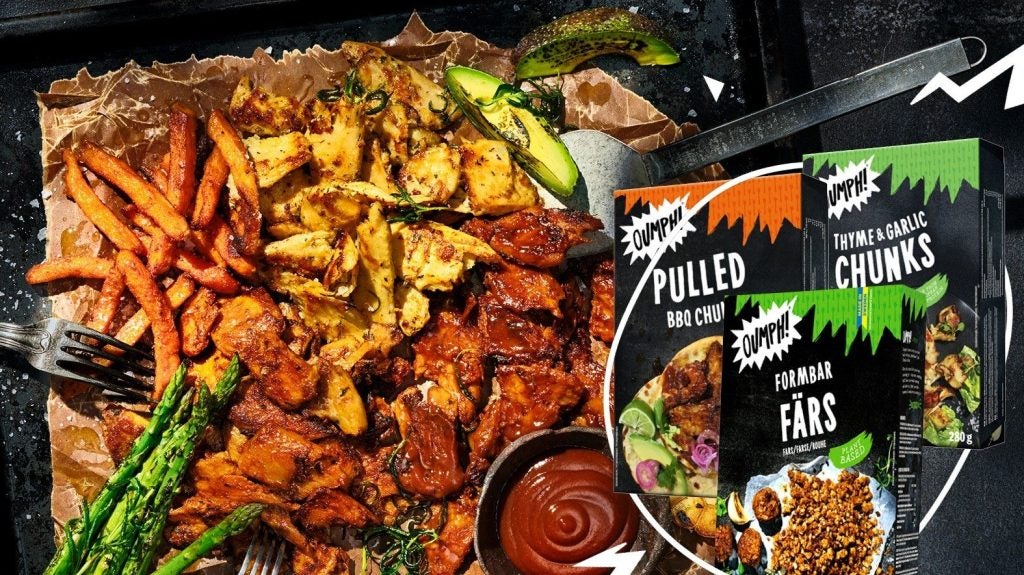
Fry’s is mostly in South Africa and Australia. Like is in the DACH region and also launched into Tesco in September, then moved into Morrisons, Iceland and Sainsbury’s. We also recently launched Like in South Africa. And Oumph! is in the UK and Nordic markets, while NoMeat is a UK brand.
SH: Livekindly did also have the Giggling Pig and Happy Chicken brands for the Chinese market. Are they still around?
DS: It was our idea to enter that market where the category was booming but to enter China we were required to work with a partner and, right when we were working to establish ourselves in China, Covid came in, the borders closed. Then we decided to step back from there. We still have the concepts, waiting for the right moment to enter the market.
SH: What about the Dutch Weed Burger brand you bought in the Netherlands?
DS: It is still our brand but we are not trading with it. But we still have that capability for the right moment.
SH: Plant-based meat has gone through consolidation and some companies have fallen by the wayside. Do you think it’s a market still ripe for M&A or for new entrants?
DS: For new entrants, I would say it’s a tough market. There are still too many brands in certain markets and we all know how the shelves work, the shelves need to consolidate into fewer players that drive the category.
At the moment, there’s still too many small brands and there will be consolidation of those brands in the next couple of years. Are they going to have a certain strength to be able to join a company Livekindly? There might be some that might but others might just go.


