

Even after a week of the US-Israeli war with Iran, it will be tricky for food-and-drinks industry executives to determine how the conflict could impact their operations, supply chains and, further downstream, consumer confidence.
For those with staff in the region, the top priority will, of course, be employee safety and the security of any operations in the countries directly affected.
Go deeper with GlobalData


Discover B2B Marketing That Performs
Combine business intelligence and editorial excellence to reach engaged professionals across 36 leading media platforms.
However, senior management teams will be trying to figure out how the Iran crisis could affect their businesses in a range of other ways from distribution and trade to input prices and shopper sentiment.
Beyond concerns about staff and physical assets, attention will be principally centred on three areas: logistics and trade routes; energy price volatility; and consumer demand.
In response to the attacks by the US and Israel, Tehran has launched its own salvos against targets across the region, taking the conflict across borders. Drones and missiles from Iran have been fired at Bahrain, Kuwait, Qatar and the UAE. A drone crashed at a UK military base in Cyprus on Sunday. On Wednesday, the US hit an Iran warship close to Sri Lanka.
The spread of the conflict has hit air traffic, forcing carriers to suspend and reroute planes. The impact on shipping is a major issue. On Thursday, the maritime sector, in a joint statement from organisations representing staff and employers, designated the Strait of Hormuz, Gulf of Oman and Persian Gulf as a “warlike operations area”, an upgrade from the “high risk area designation” they issued on Monday.
The move, the statement read, “reflects the continuing and heightened threat to seafarers and vessels operating in the region”. It added: “Hundreds of vessels are stranded in the Gulf following the halt of vessel movements through the Strait of Hormuz, highlighting the scale of disruption and risk facing civilian crews in the region.”
Thursday also saw reports of Iran targeting an oil refinery in Bahrain and an Iranian news agency claim the country’s military had hit a US oil tanker. In short, it’s a volatile and fast-evolving situation that will be difficult for executives to read.
CEOs, when asked on the record, have sought to underline that they are watching the situation closely, they are hoping the conflict ends rapidly but that it remains difficult to judge at this stage exactly what the impacts could be.
“We’re six days in. No-one saw last Saturday coming. What we’ve had a look at is what potential impacts there could be but it depends how long this runs, it depends on whether it escalates and whether there are knock-on effects we haven’t thought about,” Simon Hunt, the chief executive of spirits giant Campari, told Just Food sister site Just Drinks on Wednesday.
The cost of oil and gas
One aspect Hunt and his team are monitoring, like many across the food and beverage sectors and the wider business world, are movements in the prices of oil and gas.
Around a fifth of the world’s oil is moved through the Strait of Hormuz, which lies to the south of Iran. Roughly a fifth of the world’s trade in liquefied natural gas also moves through the strait, principally from Qatar.
Traffic through the strait has all but halted. On Wednesday, Iran’s Fars news agency claimed it had full control of the strait. President Trump has said he is prepared to use the US Navy to help get tankers moving.
Hunt met a supplier on Monday and unsurprisingly the situation was discussed. “We’ve got a big focus on our cost of goods anyway, so I was with the CEO of a glass company on Monday and this was front and centre of the conversation: what it could mean; what are the implications,” he says. “When you’ve got the person who’s buying the energy to make the glass and he’s saying ‘I don’t know, we’re four days in’, we have to wait and see. We kind of know how to navigate it. We’ve got the right structure to be able to do that but we’ll have to wait and see how it plays out.”

The uncertainty and volatility demands scenario planning to weigh up the consequences of a conflict that could end quickly or last weeks or months, with not just the Strait of Hormuz blocked but critical energy infrastructure targeted.
Researchers at Dutch bank ING say insurers are cancelling cover, shipping premiums are rising and vessels are re-routing or pausing transits. The impact on energy prices will be determined by the length of the conflict but it has caused minds to reflect on the impact of Russia’s invasion of Ukraine four years ago.
As ING’s researchers point out, the oil supply at risk from a blockade of the Strait of Hormuz is roughly 15-20% of global supply, depending on how much oil Saudi Arabia can divert by pipeline to the Red Sea. That compares to the 7-8% of global supply generated by Russia that was at risk during the early days of the country’s war with Ukraine, when the price of Brent spiked to almost $140 a barrel.
ING notes OECD stocks are in the region of 200 million barrels higher than they were in the lead up to the invasion of Ukraine but warns a full blockade lasting two weeks could see this buffer disappear.
For natural gas, 22% of the global trade in liquified natural gas is at risk, ING says. Oman’s exports don’t have to go through the Strait of Hormuz but Iran has targeted drones at the country’s ports and reportedly attacked two oil tankers. Compared to before the Ukraine war, ING says the market for liquified natural gas is “relatively better positioned now” thanks to a build-up of capacity in the US. However, the researchers add: “In the immediate term, capacity additions fall well short of potential Persian Gulf supply losses.”
Of course, the specific impact of spikes in energy prices on a food or drinks manufacturer will depend on the company’s production footprint, energy mix and product portfolio. There is also the question of contracts when they’re due to expire.
Cyrille Filott, lead consumer analyst at Rabobank, says in general food and drinks companies have “learned the lessons” of the 2023 spike in energy prices and “have become smarter” about hedging.
“It still may be that some of these contracts are ending around now, or they might be in a situation that this could become critical,” he reflects.
But Filott points to the current position of Brent crude futures and of the price of gas per megawatt-hour on the benchmark Dutch TTF exchange.
“TTF is at around €50 ($57.83). The peak that we saw in 2023 was €350. Brent, yes, it is around the $80 level but it’s not that critical just yet. Only in the scenario where we will see destruction of capacity, then it will become really painful and companies will start scratching their heads. Otherwise, Brent prices, if I’m not mistaken, were around the same level in February of last year,” he says.
The cost of fertiliser could be another issue. As well as for gas, the Strait of Hormuz is an important route for the input.
“There are a few countries that might struggle with this,” Filott says. “One would be Brazil because they are very dependent on it but I don’t think this is the right time for them to buy, so unless this takes longer, the impact on Brazil might actually be low.
“It’s perhaps more North American and north-western European farmers but, even there, it’s the question of duration. If [the conflict] is long, we might see a trickling up of prices and therefore a prolonged reaction.”
Trade associations in the UK and Germany have already publicly called on the countries’ governments for support.
Balwinder Dhoot, director of growth and sustainability at UK trade body The Food and Drink Federation, says it’s too early to say what the “true impact” of the conflict could be on the sector in the country but underlines the anxiety the organisation’s members will be feeling about energy costs.
“With the food manufacturers already under strain from years of rising business costs and food inflation running higher than historical averages, seeing the spike in gas prices will be a concern,” Dhoot says.
The Federation of German Food and Drink Industries (also known as the BVE) has pointed to the rise in the price of gas on the TTF exchange (it was €32 per megawatt-hour last Friday) and says rising oil prices are putting pressure on logistics costs.
Anyone who wants to stop the looming cost tsunami for the food industry, so as not to burden consumers further, must act decisively now
Christoph Minhoff, German trade body BVE
The spike in energy costs sparked by the Ukraine war put pressure on businesses, leading some to the wall, and others to look to push through higher costs to consumers. Some succeeded but not all. Whether that would be feasible again is up for debate. The impacts on shopper behaviour is still being felt with volume sales sluggish in many European FMCG markets.
“Anyone who wants to stop the looming cost tsunami for the food industry, so as not to burden consumers further, must act decisively now,” Christoph Minhoff, the CEO of the BVE, says. The association, like the FDF, is calling for government action to support manufacturers bracing for yet more cost pressure four years after the last major spike.
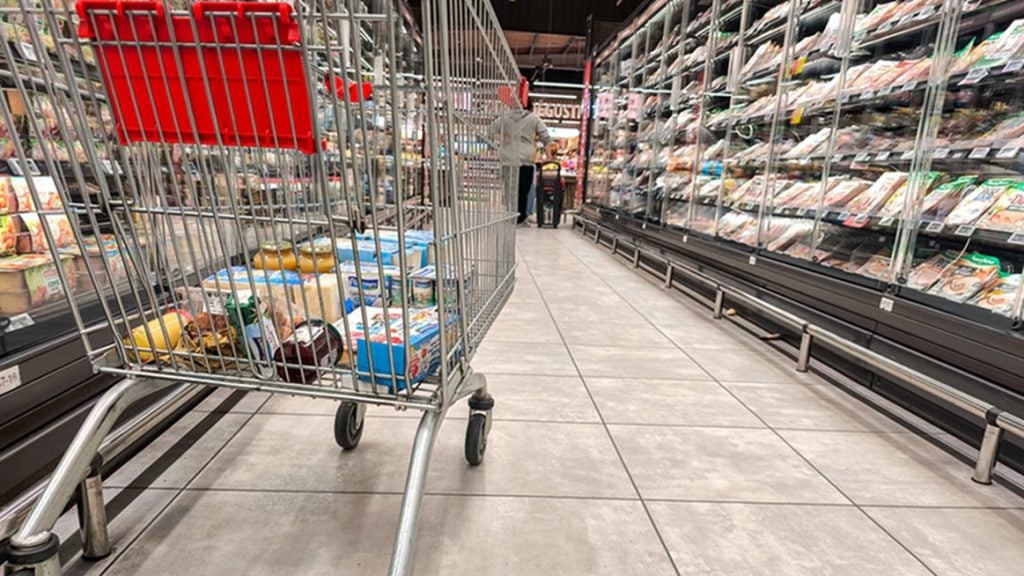
Consumer confidence
Thijs Geijer, an economist at ING, says the Dutch bank had surveyed EU consumers earlier this year for their expectations for food inflation this year against a backdrop of moderating commodity prices. “They were pretty pessimistic in the majority,” he explains. “It’s still maybe one of the biggest concerns for consumers.
“On the food inflation side, things looked pretty good at the start of the year but, with energy prices now spiking and questions about how long they will be at elevated levels, the inflation question becomes more important again.
“It’s also the time of the year that many discussions between manufacturers and retailers are taking place. Maybe some are in the finalising stage. If something big has happened, does that shift the needle on some of these discussions?”
Further afield, ING highlights the impact on inflation in Asia, a region, the bank says, is “particularly vulnerable” to the volatility in oil prices because it relies heavily on imports. All countries bar Australia, Malaysia and Indonesia run deficits in their trade in oil and gas, the bank says.
“Because many emerging Asian economies have a relatively high weight of energy in their consumer inflation baskets, rising oil prices feed quickly into headline inflation,” ING researchers wrote this week. “On average, a 10% increase in oil prices raises CPI inflation by about 0.2 percentage point.
“Our base case had headline inflation across most of Asia rising in 2026 but still staying within most central bank targets. But a price shock of this magnitude – if it lasts – would likely push inflation above target ranges and increase the pressure on central banks to tighten policy sooner rather than later.”
Geijer emphasises that there will be a couple of topics under particular consideration with food and drinks manufacturers’ finance teams in Europe. “If inflation is going up, will central banks change their strategies?” he ponders. “The inflation outlook has been quite stable for quite a while. Will they feel the pressure to raise interest rates? For the finance teams that’s a tangible question.
“And, in some cases, there is foreign exchange. The dollar has been strengthening a bit on this because it’s a safe haven. For some European companies for whom the foreign-exchange effect last year was pretty negative, especially the ones that export to the US, the foreign-exchange impact on their figures for their upcoming quarter may be a bit less tangible than before.”
It is a bit of a wake-up call again that volatility is here to stay
Cyrille Filott, Rabobank
As the crisis ticks into a second week, all in business will be watching nervously. Qatar reportedly told the FT the country expects the Gulf’s energy producers to halt exports if the conflict continues and could push oil to $150 a barrel.
“Everybody that has not called for force majeure we expect will do so in the next few days that this continues. All exporters in the Gulf region will have to call force majeure,” Qatar Energy Minister Saad al-Kaabi told the FT.
It would be a surprise if food and drinks manufacturers aren’t already sketching all sorts of supply-chain scenarios, even if publicly few would want to discuss them.
“If shipping disruptions or energy shocks persist for months, companies will start thinking about more structural responses: stockpiling, diversifying suppliers or adjusting pricing strategies,” Ivan Torossian, a consulting director for GlobalData, Just Food’s parent, says.
“For food and drink companies, the main transmission channels are energy, shipping routes and agricultural inputs. Even if the conflict itself is geographically contained, disruptions to oil flows or major trade corridors can quickly ripple through logistics costs, fertiliser prices and ultimately food inflation.”
For Filott, the Iran crisis underlines the importance of business resilience in a volatile world.
“The discussion in the boardroom is mostly about geopolitical volatility. Things move so quickly and swiftly. This happened over the weekend. Everybody has been talking about this the entire week. We forgot about the tariffs in the US, which was the week before,” he says. “It is incredibly difficult to keep up with all the changes. It was a big theme in 2022 and it’s now back: resilience. It’s not new but it is a bit of a wake-up call again that volatility is here to stay.”


