
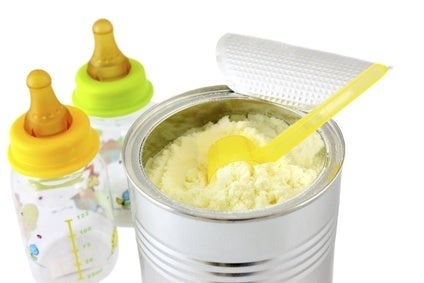
Arla Foods is wise to invest in its whey protein production capacity. However, the company is far from alone in pursuing this strategy, with various dairy firms stepping up production to meet growing global demand. As activity increases so too could competition, Katy Askew suggests.
Arla Food Ingredients, part of Danish dairy cooperative Arla Foods, announced today (1 September) that it is investing EUR38m (US$49.9m) to establish a new production facility in Denmark in order to meet the “booming demand” for whey protein hydrolysates.
Go deeper with GlobalData


Access deeper industry intelligence
Experience unmatched clarity with a single platform that combines unique data, AI, and human expertise.
The site, located next to Arla’s existing whey protein facility in Videbæk, is expected to be operational by the end of 2016 and will increase three-fold Arla Food Ingredients’ capacity for whey hydrolysates.
Whey, a by-product of cheese manufacturing, was once fed to livestock. However, it has jumped in value as it is now used in human food for both nutritional and functional purposes. The ingredient has applications in the infant, sports and clinical nutrition sectors and demand growth is strong.
According to Dairymark, a research provider, global demand for whey protein has increased from just under 500bn tonnes in 2008 to a projected level of almost 750bn tonnes in 2014.
“Growth in global demand for whey protein is widely expected,” the researchers postulate. “The applications base for whey protein is expanding fast – this is driving future global production growth… Whey protein is currently under-priced in the current market – especially with regards to other dairy commodities.”
So, with demand increasing and potential for improved pricing too, investing in increasing its capacity to turn this otherwise underutilised by-product into a value-added ingredient is clearly a smart move from Arla.
The company is also wise to focus its energies on higher-priced whey hydrolysates.
Whey as an ingredient is offered in a number of forms, including concentrates (which are higher in fat, but also higher in active compounds) and isolates (where fat and lactose are removed but are also typically lower in bioactive compounds).
Hydrolysates are predigested and partially hydrolyzed whey proteins, making them easier to metabolise. Arla says they are a “gold standard” form of whey that, the company suggests, offers “superior benefits compared with intact proteins”. They also typically command a higher price point.
Henrik Andersen, CEO of Arla Foods Ingredients, comments: “When we speak with our customers they make it clear that whey protein hydrolysates are a very big part of their future plans and they are keen to work with companies who can guarantee ongoing security of supply.
“The investment in this factory sends out a strong signal that Arla Foods Ingredients will continue to be at the vanguard of the hydrolysates sector and that we will be able to satisfy demand while adhering to the strictest quality and safety standards.”
Arla is not the only major dairy group hoping to boost returns by turning a low-value side effect of cheese production into a value-added ingredient.
Just last week, Finnish dairy giant Valio announced it is investing EUR70m to expand whey powder production, targeting growing demand for infant formula in China as a key market for the product.
Like Arla, Valio aims to increase the value of the whey powder it offers. The company said its new whey plant will enable product development to “increase the value of whey” and added it has developed a technology that produces more “nutritionally valuable” whey. The company stressed the new facility is capable of producing “top-quality” demineralised whey powder.
The UK’s Dairy Crest recently established demineralised whey powder production at its creamery in Davidstow, Cornwall. Earlier this summer, the group revealed that it has struck a deal that will see Fonterra – the world’s largest dairy exporter – sell the ingredient on the UK dairy’s behalf. Chief executive Mark Allen stressed that the deal will lift Dairy Crest’s exposure to “global growth opportunities”.
For its part, Fonterra has also focused on a strategy to improve margins by growing the value-added side of its ingredients business, including whey powder.
There have been some significant bumps in the road – such as the recall of whey powder concentrate over concerns that it could contain a botulism-causing bacteria. While the scare turned out to be a false alarm, Fonterra’s reputation was hit and the relationship with a key customer – Danone – was soured. The group has nonetheless continued to make strides in this area.
Like many others in the space, Fonterra has placed a particular focus on growing its business in China and last week the New Zealand cooperative announced a tie-up with Chinese infant formula firm Beingmate.
The companies are positioned to benefit from complementary competencies and competitive advantages. Fonterra brings to the table its top-class ingredients, raw milk sourcing and supply chain know-how, while Beingmate offers strong national distribution throughout China, a strong brand and a reputation for food safety.
When it unveiled its half-year profits last month, Ireland’s Glanbia said it will invest EUR60m in its ingredients arm to add “further value to our whey stream”. The move will drive the growth of its ingredients business – its largest unit by sales – as well a supporting its performance nutrition arm, which includes brands like Optimum Nutrition whey powder.
Numerous global dairy manufacturers are investing heavily in their whey operations. Currently, demand growth is supporting this trend and the prospects for these investments look bright.
However, with a growing appetite for investment in whey powder production competition in the arena is also likely to rise. As more players ramp up their capacity, there could come a tipping point where production growth meets – or indeed out paces – demand.
Dairy majors such as Arla are therefore shrewd in focusing on high-quality whey powder production and stressing points of difference, such as reliability of supply.

