

As the world’s largest producer of olive oil, quality, traceability, sustainability and, of course, taste, are at the heart of Deoleo’s philosophy.
Backed by CVC Capital Partners since 2014, Madrid-headquartered Deoleo is based in the epicentre of the global olive-oil industry and, as well as its Spanish facility in Alcolea, Córdoba, the company has a factory in Italy located in Tavarnelle, Florence.
Go deeper with GlobalData


Discover B2B Marketing That Performs
Combine business intelligence and editorial excellence to reach engaged professionals across 36 leading media platforms.
It counts Bertolli, Carapelli and Carbonell as its most renowned brands among a portfolio that helped the company generate annual sales a tad shy of €1bn ($1.17bn) in 2024.
The olive-oil industry in Europe, however, has been blighted by drought and wildfires in recent years to the chagrin of consumers, who have seen prices on supermarket shelves rise considerably. And climate change has added to the challenges emanating from diseases, most notably Xylella fastidiosa.
Amid those challenges, Just Food’s Simon Harvey chatted with a trio of Deoleo experts responsible for leading the company’s ESG agenda, led by Maria Luchetti, its
chief marketing, innovation and sustainability officer.
Luchetti was joined by Jose Aparisi, the global head of corporate communications, public affairs and ESG, and José Rica, global brand director for Carapelli and sustainability director.
US Tariffs are shifting - will you react or anticipate?
Don’t let policy changes catch you off guard. Stay proactive with real-time data and expert analysis.
By GlobalDataSimon Harvey (SH): What are the main ESG challenges that Deoleo faces?
Maria Luchetti (ML): We have a worldwide impact as the biggest branded olive-oil player. We ensure that the olive oil we put in the hands of our consumers is high quality and is adapted to the different organoleptic tastes around the world.
We want to guarantee we have olive oil for future generations. It all starts by taking care of the land, taking care of agriculture and farmers’ agricultural practises.
We focus on helping our farmers because we have a lot of internal technical knowledge to help them upgrade agriculture practises, especially around regenerative agriculture – better use of the soil, water and electricity management, the use of agro-chemicals and social aspects too, or the way they manage people in the field. We have a sustainability protocol to reach these farmers and help them with KPIs, concrete actions and assistance.
From our own production activity, it’s reducing the environmental impact of our factories. It’s a simple process – we blend olive oil, filter it, bottle it and preserve it in the best conditions. In our factories, it’s about taking care of the waste, taking care of the electricity and water management. Our process is quite clean in that sense.
SH: Do you put certain demands on your suppliers?
ML: We have a sustainability protocol and for farmers to have access to our assistance they need to subscribe to our protocol. We work with them for one to two years to get them ready for this certification. They receive training every year from our technical team.
We help them set objectives for water reduction, reducing the waste and moving them towards regenerative agriculture. It’s also about how they manage energy and protecting biodiversity.
Jose Aparisi (JA): One thing that is critical for us is we partner with universities and pass those learnings on to farmers to implement these techniques. One example is soil: what are the actions we need to put in place in Greece and in Spain, for instance? We then take these learnings to farmers and tell them this is the way you need to treat the soil.
ML: We are participating in the EU programme Soil O-Live and getting funding to initiate training to prevent the degradation of soil and ensure the quality of the olive oil.
JA: Sustainability managers are also working on the farms under our ESG protocol to help farmers to implement sustainability practices under the business model.
SH: Deoleo has said 39% of its extra virgin olive oil is sourced from certified mills with a target to reach 70% by 2030. Can you explain how that certification process works?
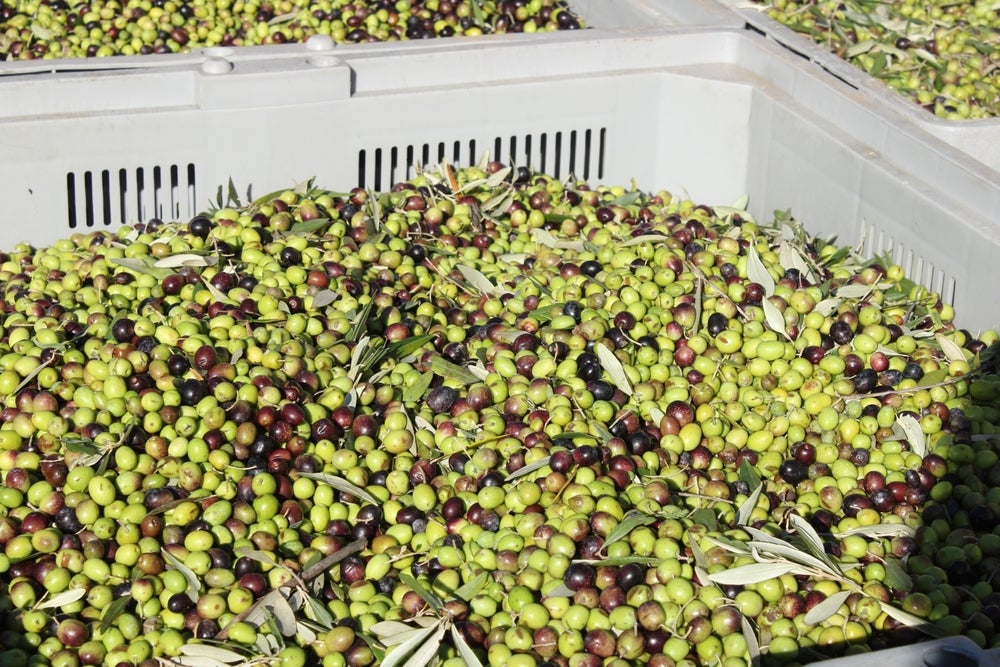
ML: We started the sustainability protocol in 2018 to develop all the criteria to get certified. We buy olive oil from different countries – from Spain, Italy, Greece, and Tunisia and sometimes from different parts of the world, for instance Argentina and Chile.
We started with Spain where there’s a lot of different farmers, a lot of families involved on little portions of land that then goes into cooperatives. We go into all the details of the protocol covering eight different points of action such as the environment, water, energy, soil protection, biodiversity, waste management and quality. Also included is the use of agri-chemicals.
We now have some certified mills in Italy and then in the last two to three years we broadened that to Tunisia, Greece, Argentina and Chile. Every year, it’s about going a step forward, enlarging, certifying more mills around the world, and increasing that percentage.
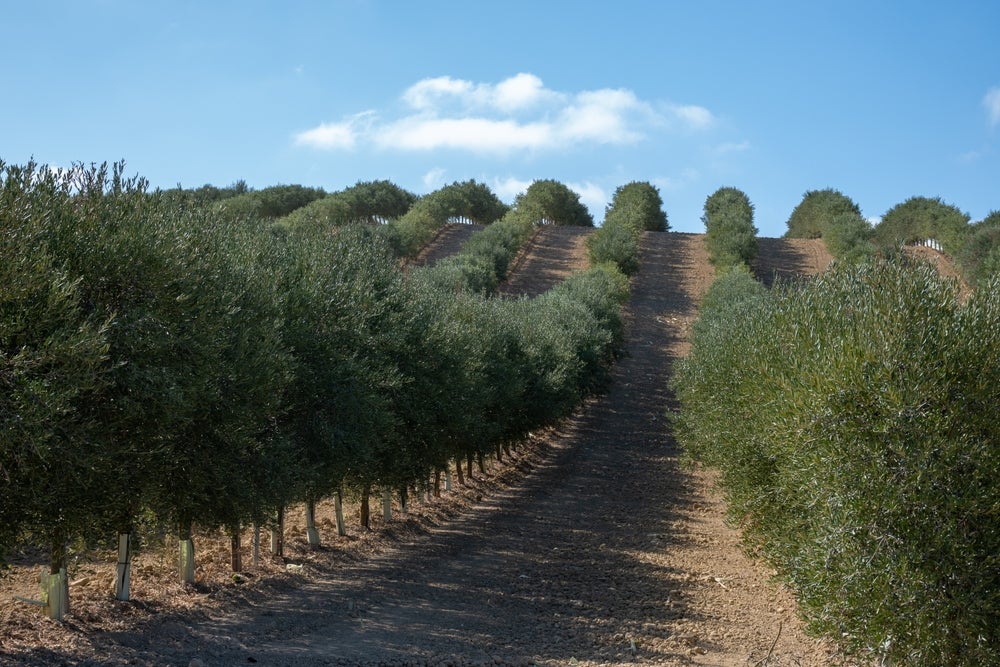
JA: We don’t give farmers anything in exchange for enrolling to our protocols because they believe it is the only way to guarantee the future of their olive groves. Sometimes they have to fight internally with cultural things they have been doing for years.
ML: Consumers nowadays are much more aware of bio trends, the use of agro-chemicals, the olive oil’s origins, social aspects, and these kind of things, so we communicate to consumers on the bottles that this is sustainably sourced olive oil.
JA: We are employing blockchain to put QR codes on the olive-oil bottles to say this is the source, this is the village, this is the variety, this is the city, so farmers need to put all the information in cloud systems. It puts value on our brands and it puts value on farmers.
SH: Do retailers come to you and say this is what we want to see in terms of ESG credentials? Are they quite aggressive in their ESG agenda?
ML: The journey retailers are on has been really transformative. Three, four or five years ago, it was very difficult for us to understand who was the right stakeholder inside the retailer who was going to listen to our sustainability strategy.
Yes, they were sending assessments every year but it was not all of them that were interested that much. That has changed dramatically during the last three years and they now have their own targets. They’re also adhering to SBTi [the Science Based Target Initiative for CO2 emissions).
José Rica (JR): We receive monthly requests from customers all over the world related to our carbon footprint, emissions, packaging, how we produce, the quality of the products, how it is sourced. They’re very interested about the sustainability protocol, how we track and how transparent we are with consumers through the QR code.
SH: I imagine reducing Scope 3 emissions in your supply chain are your biggest challenge given the number of small farm suppliers?
ML: Scope 3 represents 99% of the impact that we’re having as a company, especially related to raw materials such as glass. We have worked with SBTi and have set a target to reduce our Scope 3 emissions by 36% by 2032. They have been cut by 31% since 2022.
It’s been a journey for us because we have been measuring Scope 1 and 2 emissions since 2020-2021 but they were only 1%. If we want to make a difference, it’s about Scope 3, and this is where SBTi is helping us a lot.
We aim to reduce absolute greenhouse gas emissions from Scope 1 and 2 by 50% by 2032, using 2022 as the base year.
SH: What does Deoleo do on the labour front – ensuring a living wage, workers’ rights on farms?
ML: Within our protocol we have a socio-economic aspect, which includes men and women. One of the improvements we’ve made is 90% of the certified mills have signed a commitment on labour rights and 23% have an equality plan.
JR: We have organised, for example, a couple of symposiums in Córdoba to give visibility to women on the farms. They are very important in this sector but they haven’t had visibility for the past 50 years. We are now giving visibility to the women that are in the value chain.
JA: The olive-oil sector has always been men dominated but if you really dig into it, it’s women who are leading this conversation. When we started working with the universities, who was leading the process on quality? A woman. When you go to the testing panel that we’re using in all the labs and factories, who is the person leading this lab? It’s a woman. It’s a woman when you go to the farmers, and sometimes it’s the woman who wants to take care of her grandfather’s or father’s legacy to keep the land. So we created that as a pillar of our strategy in the last two years.
In Italy there is also a generation problem. There are no young people who want to continue working on the farms or the mills. We want to set up a project in Italy to encourage young people to continue this process. Our brands of Bertolli, Carapelli and Carbonell have a legacy that we need to protect – not for us but for the future And this sustainability piece is critical.
ML: Olive oil is so good for your health that it deserves the best care throughout all the value chain. That’s why our strategy is articulating three big pillars from the farm to the table of the consumer.
Our sustainability protocol is to take care of the land and the farmers. Then the second pillar is called ‘blending with love’ related to all our activities at the factory, the quality that we want to ensure, the impact of our activities, and reducing the impact of our activities. The third pillar is caring for you – a mission of educating the consumer about health and olive oil.
SH: Drought has been a big problem for the European olive-oil industry and also disease. How do you go about protecting land use?
ML: Within our protocol and regenerative agriculture focus, we are training farmers to install better practices – protecting the soil from degradation, protecting the environment, biodiversity, and natural resources. Water is scarce, so that gets a lot of focus, helping them install efficient irrigation systems. There’s also a lot of preventive and reactive work to control disease.
JA: Something that was incorporated in this sector last year is there are different types of olive tree. One is the super-intensive olive tree where you have to guarantee water but you control the water much better, with much better quality, and you have more technology to increase the production in a controlled way.
We are helping farmers and encouraging them to think about ways to transform their olive trees to other kinds. You can maintain in some areas the traditional olive trees but you need to start investing in other kinds of more modern olive trees to control production, reduce water and be prepared for climate change.



