
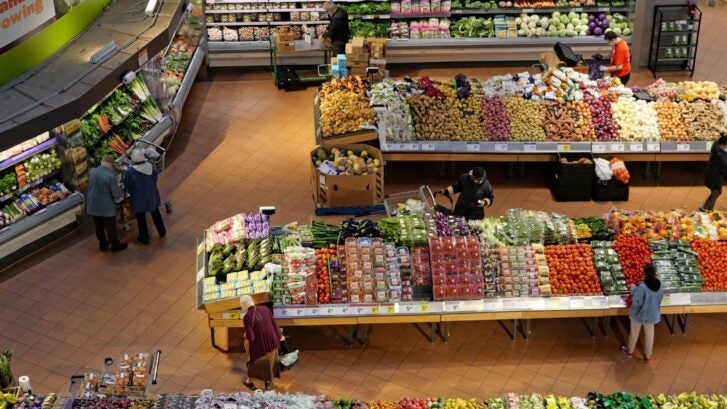
Food prices in Canada could rise by up to 6% next year, with the cost of meat potentially increasing faster, academic research has suggested.
Canadian citizens are forecast to see food prices increase 4-6% next year, according to a study by eight of the country’s universities.
Go deeper with GlobalData


Discover B2B Marketing That Performs
Combine business intelligence and editorial excellence to reach engaged professionals across 36 leading media platforms.
The most recent CPI data for food prices in Canada show a 3.4% rise in October, down from 4% in September. However, the rate of food inflation still exceeded overall inflation, which stood at 2.2%.
The report, put together by institutions including Dalhousie University, the University of Guelph and Université Laval, forecast meat prices could rise 5-7% in 2026 amid a “substantial rise” in the cost of chicken.
Amid rising beef prices, demand for chicken has increased, the researchers said. However, domestic production for both proteins reached “record lows”.
Deals with Mexico and Australia should help “stabilise” beef prices in Canada, the report added, but “the squeeze is expected to continue until at least 2027”.
The research suggested some products areas will see inflation at a slower rate than the report’s forecast for the overall food basket.
The study predicts bakery prices will rise by 2-4%, the same projection it gives for dairy and eggs. Fruit prices are forecast to increase 1-3%, with vegetable prices seen 3-5% higher. Seafood prices are forecast to increase 1-2%.
“Food inflation is putting Canadians under a lot of pressure, forcing people to make trade-offs every day. These trade-offs range from switching to a cheaper brand to delaying making purchases altogether,” said Dr. Stacey Taylor, assistant professor for business analytics at Cape Breton University. “Not only is there an issue with food security, but there is also a lot of concern over nutritional security and being able to afford a healthy diet.”
Meanwhile, restaurant inflation is forecast to be 4-6%, the report said.
“Despite steadier inflation, Canadian families are still feeling the squeeze at the grocery store,” Dalhousie University’s Dr. Sylvain Charlebois said. “Our forecast for 2026 makes one thing clear: food affordability will remain a major pressure point in the year ahead.”



