
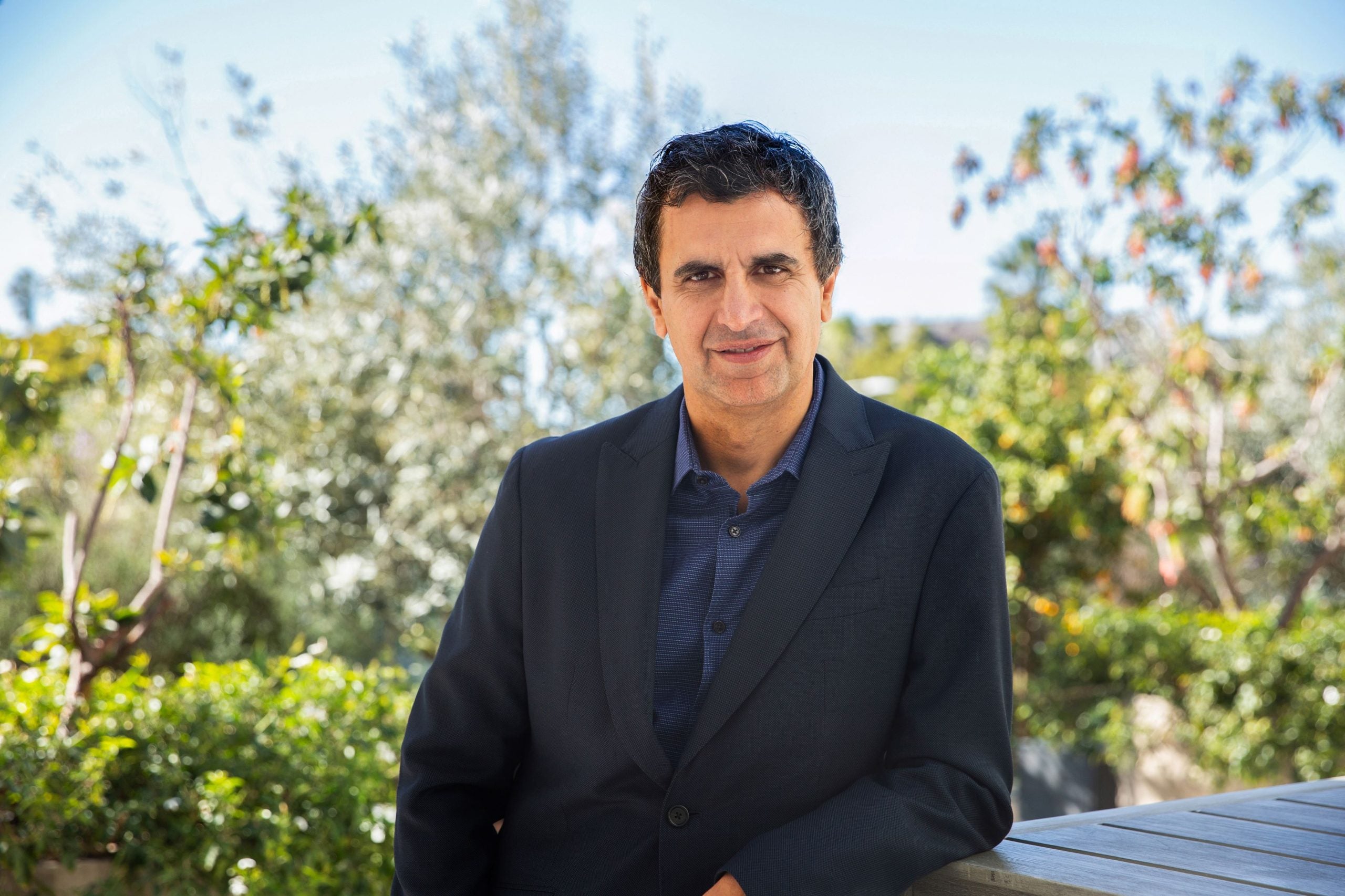
In his first official address since Unilever completed the demerger of ice cream, CEO Fernando Fernandez has left markets second-guessing over the future of the remaining food assets.
Speaking at the JPMorgan fireside event yesterday (9 December), the Unilever veteran was non-committal on whether food would be divested, a prospect long anticipated and now gaining fervour in the wake of the ice cream spin-off.
Go deeper with GlobalData


Discover B2B Marketing That Performs
Combine business intelligence and editorial excellence to reach engaged professionals across 36 leading media platforms.
Instead, Fernandez provided a balanced perspective that could be interpreted as ambitions to stick with food, or at least certain assets, or even as ripening up the food portfolio for disposal.
“At this stage, our food business is margin accretive, is cash accretive, it has a low capital intensity,” Fernandez told JPMorgan host Celine Pannuti, the investor’s head of consumer staples. “It’s a very attractive business.”
The CEO, who stepped into the hot seat in March, was presented with the proposition by Pannuti that food is now the “elephant in the room” as she asked what might stand in the way of a disposal.
As an example, Pannuti asked how the Horlicks brand might continue to fit into Unilever’s portfolio. Fernandez side-stepped the point and instead made comments around what Unilever considers to be among its ‘power brands’ – Hellmann’s condiments and Knorr dried soups and cooking aids.
He said Hellmann’s and Knorr currently make up 60% of the food business and that will rise to 70-75% of revenue. But Fernandez did not provide a timeframe nor detail how Unilever will get there other than to single out premiumisation.
“We’re outperforming the foods industry, you have seen our numbers,” the CEO responded. “You compare particularly with American foods, we are doing well. I believe we have a food portfolio that is an envy of the industry.”
Fernandez referred to completed disposals in food of around €1-1.5bn ($1.1-1.7bn), “what I call the periphery of foods”, adding the divestments were “particularly local food brands in Europe”.
The Graze snacks brand in the UK was let go last week while the Dutch alt-meat line The Vegetarian Butcher was confirmed as sold in March. Before Fernandez took the helm, the pasta sauce Tomato al Gusto and Speciale al Gusto range in Germany – part of the Knorr line-up – was offloaded in January.
And a year ago, the Unox Dutch brand of soups and noodles, along with the Zwan canned meats brand in Belgium, were named as disposal victims.
It would be speculative to label the Marmite, Colman’s and Bovril brands as periphery but unnamed sources for Reuters suggested last month that they are all considerations for disposal.
Fernandez gave an essence to Pannuti yesterday of what it will take for food assets to remain in the portfolio.
“The business has to outperform the markets, the same happened to the other parts of the portfolio. They have to gain the right to stay in the portfolio being called Hellmann’s, being called Knorr, being called Dove, or being called TRESemmé. So that’s the way we are approaching that,” he explained.
Going forward, Fernandez told Pannuti he was eyeing bolt-on acquisitions and was willing to allocate around €1.5bn a year to M&A. However, food was not mentioned – “the focus remains in beauty, personal care, and definitely in the US and in India”.
Some further insight was provided by Fernandez yesterday when he said Unilever is “number one” in food in the US, has a shared ranking for personal care but is “number three” in beauty.
He added: “Hellmann’s is doing very well. It’s a very strong business – the condiments category is probably one of the most attractive categories within foods. It’s true that in the US, we are fundamentally anchored around condiments.”
Fernandez also outlined that “there are huge opportunities for premiumisation”, especially around what he deemed as the “French kind of stuff”.
Premium is a target area for Fernandez across the group’s portfolio where he is aiming for a 50% concentration.
“Even in the condiment category, we see significant premiumisation opportunities. The profit pool is really shifting into premium. And that’s why we continue shifting the portfolio into that direction,” Fernandez said.
Food is still a sizeable revenue generator for Unilever and comparable to the other category areas.
The sector delivered €13.4bn in revenue in 2024 of the group total of €60.8bn. Only ice cream was smaller at €8.3bn. Personal care was marginally the largest at €13.6bn, followed by €13.2bn for beauty and wellbeing and €12.3bn for homecare.
Still, Jefferies analysts led by David Hayes remain on the disposal fence for food.
“Divesting food is still one of these options, we think. That would also lead to a need to scale up HPC to sustain scale,” they wrote in a follow-up research note to the JPMorgan event.



