


The modern consumer demands sensory authenticity. When opening a ready-to-drink (RTD) cold brew coffee, a premium raspberry beverage, or a packaged mango puree, today’s buyers expect the exact aroma of the fresh ingredients. They don’t want synthetic approximations; they want the true-to-nature top notes of the original raw material.
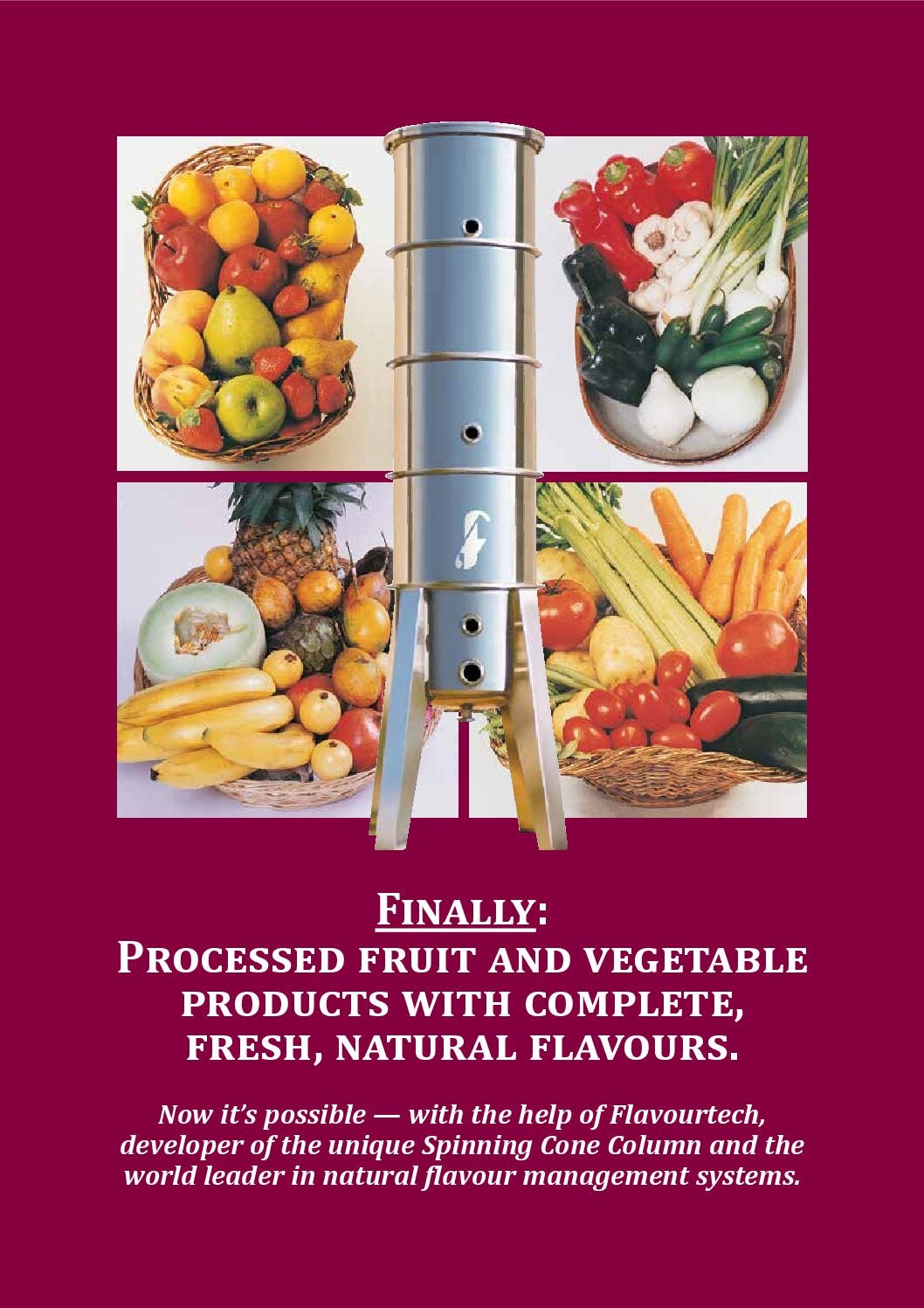
“Traditionally, capturing these fleeting, volatile aroma compounds has been the Achilles’ heel of food and beverage processing. Standard thermal processing and industrial evaporation techniques routinely destroy or vaporise these delicate top notes, sending them straight into the factory atmosphere,” says Paul Ahn at Australian technology pioneer Flavourtech.
“Flavourtech has rewritten this narrative through systems capable of capturing and preserving the full, unadulterated sensory profile of fruit, vegetables, coffee, tea, and other botanicals.”
The evolution of Flavourtech’s Spinning Cone Column
The foundation of this technology dates back to the 1960s in Australia.
At the time, standard vacuum distillation columns were already widely available on the market. However, processors quickly discovered a critical flaw: traditional distillation systems consistently damaged both the delicate thermally sensitive aromas and the feed material itself, such as the base juice. Prolonged heat exposure baked the product, ruining its fresh aroma and flavour profiles.
To solve this problem, Australian scientists engineered a radical alternative: the Spinning Cone Column (SCC). Designed specifically for the capture of heat-sensitive volatiles, the SCC discarded the destructive packing and plates of traditional distillation columns. Instead, it introduced a mechanical design utilising alternating stationary and spinning cones to create ultra-thin fluid films.
By combining these thin films with remarkably short residence times, measured in seconds, and exceptionally low operating temperatures, the scientists found a way to strip volatiles gently. This process successfully kept the quality of both the extracted aroma and the delicate feed material perfectly intact.
Dual-processing paths: slurries versus whole fruit purees
In the late 1980s, Flavourtech further developed the Spinning Cone technology, recognising that different raw materials require distinct handling strategies before even reaching the distillation column. This led to the development of two separate preparation pathways designed to lock in volatiles before they can escape into the atmosphere.
1. The slurry preparation module (for coffee, tea, and botanicals)
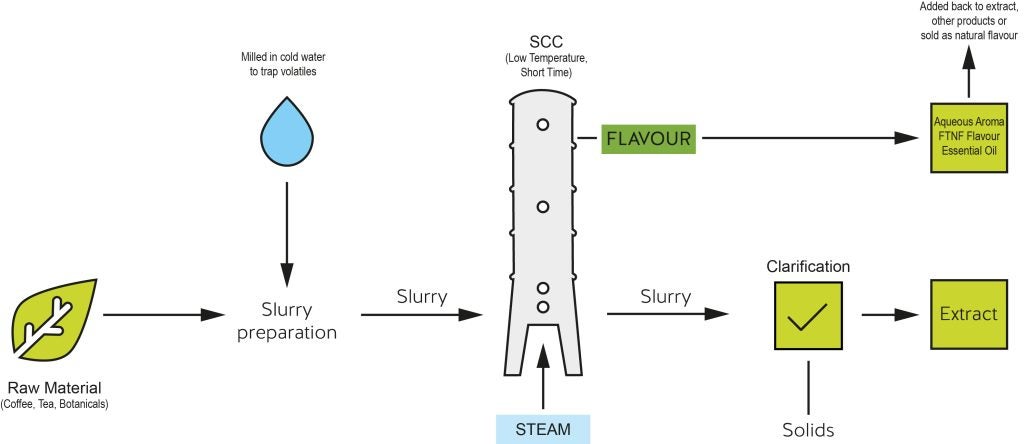
For products that cannot be traditionally pureed, such as roasted coffee beans, dried tea leaves, and botanicals, Flavourtech developed the unique slurry preparation module. This module tackles the primary cause of aroma loss: atmospheric exposure during mechanical wetting.
The system operates by milling these raw materials directly into cold water. By keeping the entire matrix cold during the grinding process, the highly volatile top notes are instantly trapped and dissolved within the liquid phase rather than flashing off into the factory’s atmosphere. This cold slurry, loaded with intact volatiles, is then fed directly to the SCC.
2. The direct puree pathway (for fruit and vegetables)
Soft fruit and vegetable streams follow a different, highly effective preparation route. Instead of being filtered into clear juices, whole fruit or vegetables are pureed using specialised milling equipment. This technique ensures that the entire matrix, including skin, pulp, and insoluble fibre solids, is kept together. Once pureed into a uniform, pumpable state, this thick puree is fed directly to the SCC for immediate aroma harvesting.
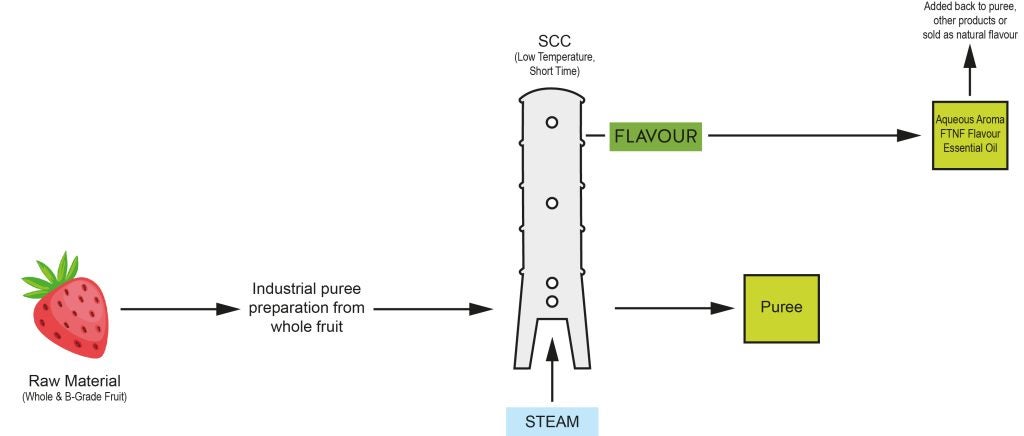
Depending on the thermal sensitivity of the feed material, the SCC processes both the cold slurries and fruit and vegetable purees with or without vacuum pressure. This flexibility allows operators to fine-tune the thermal impact, ensuring that even the most heat-sensitive botanicals suffer zero thermal degradation.
The power of solids: whole-fruit representation vs. clarified juice
What truly sets the SCC apart from conventional vacuum distillation systems is its unique ability to handle heavy solids. Traditional distillation columns soon clog if exposed to suspended solids, forcing factories to filter, clarify, or ultra-clean juices before aroma extraction can begin.
The SCC thrives on solids. Because its spinning cones generate a highly turbulent, cascading fluid film, it can process thick fruit purees, spent coffee grounds, or botanical slurries without fouling.
This capability fundamentally changes the quality of the final extract. Consider the processing of mango as an example:
- Clarified mango juice: Yields a thin, one-dimensional aroma profile because vital aromatic oils remain trapped inside the discarded pulp.
- Whole mango puree: When processed via the SCC, the system strips volatiles from both the liquid phase and the suspended fruit solids.
The result is a recovered aqueous aroma that delivers a complete, holistic representation of the whole fruit. Flavour houses worldwide have made the SCC a gold standard for this exact reason: it creates a truer, deeper, and more complex sensory profile than any clarified juice distillation system could achieve.
Transforming coffee and tea processing
The global RTD and instant coffee and tea sectors have heavily integrated SCC technology into their core production lines. In industrial coffee and tea manufacturing, traditional thermal concentration and spray-drying steps strip away the very essence of the brew, leaving behind a flat flavour profile.
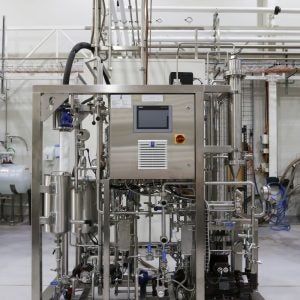
By inserting Flavourtech’s SCC into the production chain, manufacturers can extract precious, volatile top notes from the coffee or tea slurry right at the start. These high-quality aqueous aromas are safely set aside while the remaining slurry undertakes extraction, concentration and drying to form a soluble powder that can be further improved by adding back the original aroma fraction.
“For RTD coffee or tea, just prior to final packaging, the captured aroma is blended back into the RTD beverage,” Paul Ahn explains. “This technique allows brands to deliver a bottled or canned coffee or tea that bursts with the genuine aroma of a freshly brewed beverage the moment the consumer opens the seal.”
Beyond pure quality enhancement, the SCC provides a powerful toolkit for industrial sustainability and circular economy initiatives.
Beyond quality enhancement: other ways the SCC adds value
Turning waste pulp into revenue. Many fruit processors traditionally press fruit for juice and discard the remaining pulp as a costly waste stream. Today, savvy processors are taking that waste, pureeing the solids, and running them through an SCC. This extracts highly valuable, hidden essential oils and desirable top notes that would otherwise end up in a landfill, creating an entirely new revenue stream from a zero-cost byproduct.
Rescuing B-grade harvests. The system offers an invaluable lifeline to strawberry and mango farmers. Crops with visual blemishes, skin bruising, or irregular shapes cannot be sold to fresh produce markets. Instead of letting fields of fruit go to waste, growers can puree these imperfect fruits and process them through the SCC. The natural, From The Named Fruit (FTNF) aromas collected from these crops are in massive demand globally, commanding premium prices from clean-label food and beverage brands.
Post-pressing extraction in apple and orange processing. In the apple or orange juice sector, producers have traditionally accepted that a fraction of the fruit’s character is lost during initial pressing. By utilising the SCC post-pressing, manufacturers can run the residual apple or orange pomace through a secondary volatile extraction phase. This recovers a highly intense, crisp apple or citrus aroma that can be reintroduced to premium juices or sold as a natural flavouring agent.
A new era for clean-label formulation
“As consumer demand shifts decisively away from synthetic additives, the food and beverage industry requires technology that respects the complexity of natural ingredients. Flavourtech’s combination of specialised pre-treatment pathways and robust, solids-tolerant Spinning Cone Column offers a sophisticated answer,” Paul Ahn says.
By capturing the complete essence of nature, while simultaneously maximising value from factory waste streams, it proves that the future of flavour production is both highly profitable and fundamentally sustainable.
To learn more about Flavourtech’s Spinning Cone Column technoloy, download the document below.
