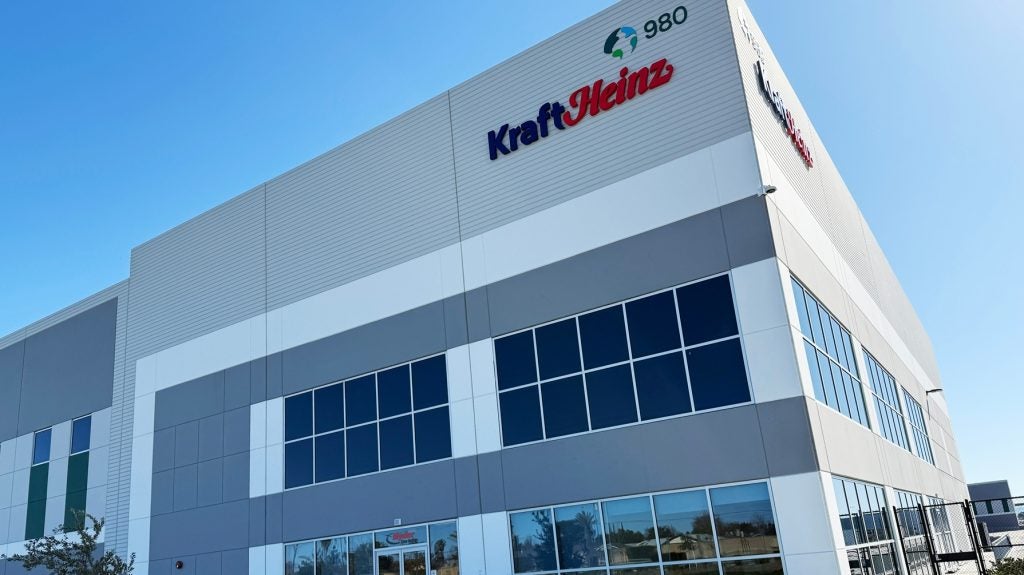
Kraft Heinz has downgraded the frozen category in its series of internal classifications, sparking analysts to suggest the chance of the US giant looking to exit that part of the market has increased.
Since taking the helm in January, Cahillane has drummed down on driving market share growth in areas by brand that he has classified as "hold", "win" and "win big".
In prepared remarks to accompany Kraft Heinz’s first-quarter results yesterday (6 May), he said 35% of the total portfolio was either gaining or holding share, up from 21% for the whole of 2025. And in March alone, the rate had gone up to about 58%.
Win big also crossed the halfway mark in March to 59%, compared to 51% for the first quarter and 28% last year.
Similarly for Kraft Heinz’s US retail business, the proportion of the portfolio holding or gaining market share was 54% in March versus 29% for the quarter.
“Driving majority of the improvement across win big is our performance in US Taste Elevation, where we have a portfolio spanning categories in which we hold strong market-share positions and have a clear right to win,” Cahillane said.
“Here, the percentage of sales gaining or holding share in the first quarter was over 80% and reached 87% in March.”
On the follow-up Q&A call with analysts, Cahillane pointed to a contrast between the frozen part of the portfolio and in-trend hydration products.
He said frozen has been downgraded from win big to hold.
“We think that is based on what the category is showing us, what our real opportunities are, and really confronting the facts as they stand and being realistic about them,” Cahillane told analysts.
“Equally, we looked at hydration and moved that from win to win big. We see strong category growth. We really like our brands in this space.”
TD Cowen consumer analyst Robert Moskow picked up on the frozen theme and the CEO’s comments.
“For their investment prioritisation, management downgraded their frozen foods business by two tiers to hold due to weakness in the categories and upgraded hydration by one tier to win big due to the position of their brands with younger consumers,” Moskow wrote in a research note.
“We believe these actions increase the probability of KHC selling their frozen business as they further reassess their portfolio. Recall that KHC came close to selling frozen to Pinnacle Foods in 2017.”
Amid the concern about the potential knock-on effects on inflation through the supply chain from the Middle East crisis, Cahillane suggested Kraft Heinz will lean toward improving productivity rather than putting price on the consumer.
He noted how the consumer is “under a lot of pressure” from the last inflation and pricing wave, emphasising the need in “creating value and affordability”.
Cahillane explained during the Q&A: “We have looked at opportunities to adjust pricing where we think it has gone a little too far, and you are seeing some results in that.
“But we will always look at the input-cost environment and say our first line of defence is productivity. We are really looking to ramp-up and have a top-notch productivity year this year because it is really needed since the consumer can only absorb so much price.”
Suggesting consumers respond to brand loyalty if the pricing is right, he added: “Ideally, a business like ours would take about half of input-cost inflation in price and then the rest in productivity.
“If we could do better than that, this is the year to do it because the consumer is under a tremendous amount of pressure. We look at it as very much our goal to be affordable and be there for our consumers in an environment like this.”
Cost-of-goods sold inflation for the year has been nudged up to “slightly” above 4% due to the Middle East.
Kraft Heinz is seeing COGS inflation “spiking up” in energy and resins, although hedges are in place through the middle of the third quarter.
If the environment remains the same inflation effects are likely to be felt in the third quarter, Cahillane said.
He added: “It is unknown what the fourth quarter and 2027 will bring. It could be that the whole environment moves towards needing to take more price.
“We cannot predict what the outcome will be in the Middle East and how that will affect costs, but it would be something that affects the entire environment. We would be looking to go with that if needed, but again, our first line of defence is productivity, investing in our brands, and driving a good top-line outcome.”