
Lactalis and Danone are caught up in concerns about the possible presence of cereulide in infant formula, the same toxin that prompted an international recall by Nestlé.
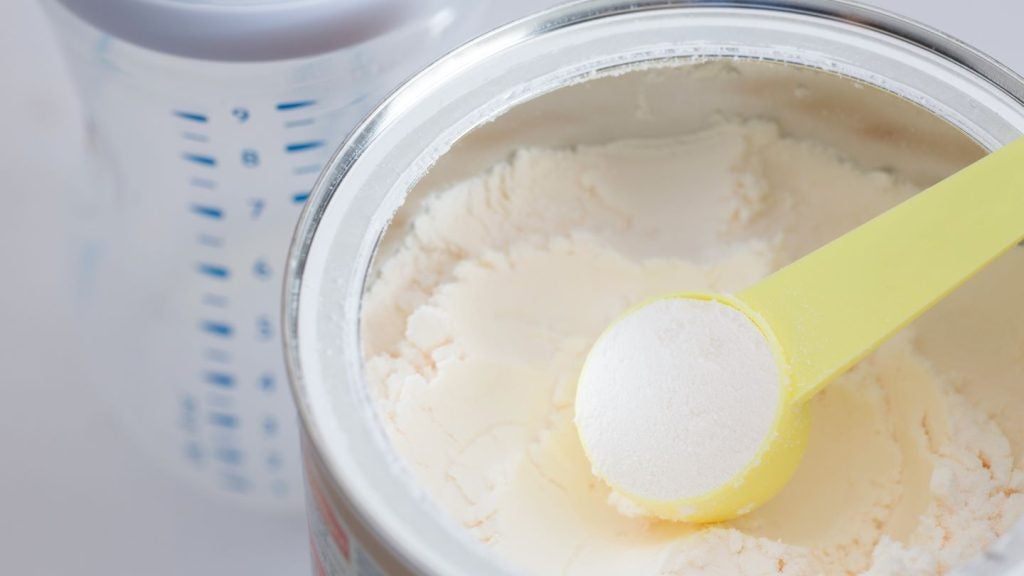
Privately owned Lactalis has issued a recall for six batches of its Picot infant formula due to the presence of cereulide.
Danone, meanwhile, has blocked the sale of certain infant formula in Singapore at the request of the local regulator as a precautionary measure.
Lactalis said in a statement today (21 January) that cereulide has been detected in an ingredient sourced from a supplier.
That was the same reason given by Nestlé when it expanded a recall worldwide in January after first alerting the public to the presence of the Bacillus cereus bacteria in select batches of branded formula produced in Europe in December.
While Lactalis has not identified the ingredient supplier in question, it will undoubtedly raise concern that the supplier is the same business as in the Nestlé case. The Swiss food major has also not revealed the name of the supplier.
The cereulide toxin, which in both cases is said to have emanated from the supply of arachidonic acid (ARA), an Omega-6 polyunsaturated fatty acid, can cause vomiting, abdominal cramps and diarrhea in babies.
Foodwatch, a European advocacy body, claimed via its French division that the arachidonic acid had come from China, without revealing the source of its information.
It said in a statement: “Foodwatch has received confirmation that the supplier of the offending arachidonic acid is based in China.
“Foodwatch stresses that this in no way absolves giants such as Nestlé and Lactalis of ensuring the health safety of their products, compliance with European regulations on traceability and information to authorities and consumers.”
Lactalis Nutrition Santé (LNS) is the division that has initiated the voluntary recall.
“This recall follows an alert from the French professional association for infant nutrition regarding the potential presence of cereulide in an ingredient (Omega 6 ARA) supplied by an international provider and used in the formulation of certain infant formulas,” Lactalis said.
“Upon receiving this alert, and in parallel with the analyses requested from the supplier of the ingredient concerned, LNS immediately initiated testing through an accredited independent laboratory to assess the potentially affected products.”
Lactalis explained that the initial analysis of the ARA ingredient and the finished formula “returned compliant results” but further analysis proved otherwise.
Following testing of “reconstituted” formula, results received by Lactalis yesterday (20 January) showed the presence of cereulide.
“We fully understand that this information may cause concern among parents of young children,” privately-owned Lactalis added. “At this stage, no complaints or reports related to the consumption of these products have been communicated to us by the French authorities, with whom we remain in close contact.”
The recall involves Picot Nutrition Quotidienne first-stage formula in 400, 800 and 850 grams, along with Picot Nutrition Quotidienne second-stage baby milk in 800 and 850g.
Picot AR second-stage 800g formula completes the six batches recalled. Lactalis advised parents not to feed their babies the affected formulas.
A spokesperson for Lactalis confirmed 18 countries are currently included in the recall, including Europe, the Asia Pacific and South America: Australia; Chile; Colombia; Congo; Ecuador; Spain; France; Georgia; Greece; Kuwait; Madagascar; Mexico; Uzbekistan; Peru; French Polynesia; the Czech Republic; and Taiwan.
Danone said via a spokesperson the dairy giant is working with the Singapore Food Agency but stressed all of its products are “manufactured in line with strict food safety and quality standards and undergo rigorous testing before leaving our factories”.
The company added that “no irregularities or deviations in relation to Bacillus cereus and ‘Good Manufacturing Practices’ have been identified”.
An added concern now is, that like Nestlé, Lactalis might have to expand its recall.
What started as a relatively benign precautionary European recall of Nestlé’s Nan stage 1 formula in mid-December escalated globally in January.
As the new year began, 37 European countries were on a published list, along with seven in Nestlé’s America’s reporting region, including Argentina and Mexico, and nine within Asia, Oceania and Africa, such as China and Australia.
The recall also expanded to SMA, SMA Alfamino and Beba formulas but remained a precautionary measure as cereulide was identified as the root cause.
The episode proved so serious for Nestlé that its CEO Philipp Navratil took the unusual step last week of posting a video in an effort to protect the company’s reputation and credibility.
“You trust us to provide products that are safe and of high quality, and we take that responsibility very seriously,” Navratil said on YouTube.
“What’s important to me in this situation is that we remain guided by our values: food safety and trust come first. This is at the heart of everything we do and reflects our deep sense of responsibility and care.”