

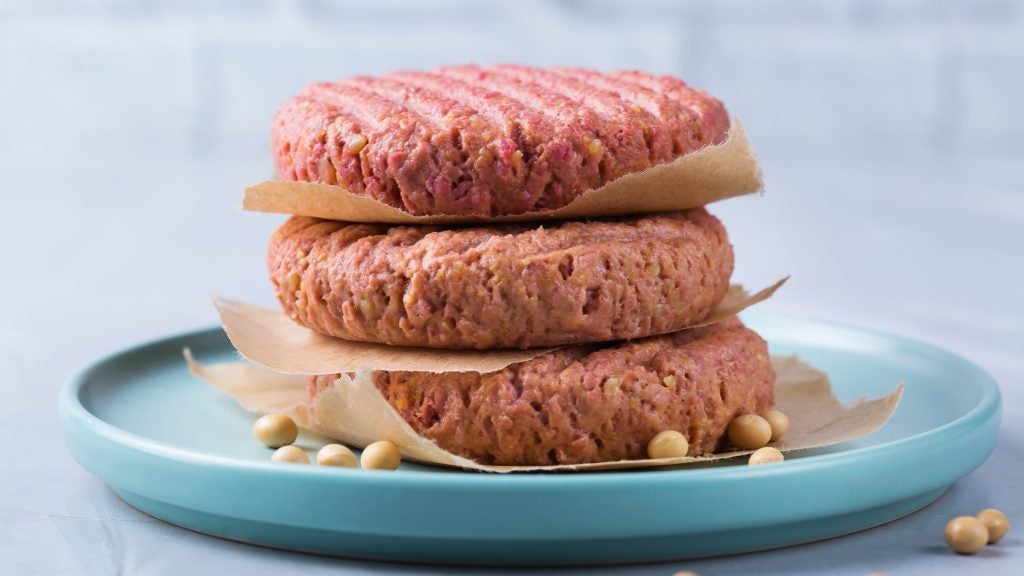
The production of vegetarian and vegan alternatives to meat in Germany dipped in 2025 after years of steady expansion.
Figures from the Federal Statistical Office (Destatis) show around 124,900 tonnes of meat substitute products were produced last year, down 1.2% from 126,500 tonnes in 2024.
The value of output also slipped, falling 2.2% year-on-year to €632.6m ($736.7m) in 2025.
Despite the annual decline, Destatis highlighted the longer-term growth in the category, with production up 107% from 60,400 tonnes in 2019.
Conventional meat production, however, continues to dwarf the substitutes market.
Destatis data show meat and meat products worth around €45.2bn were produced in Germany in 2025, up 2% from €44.3bn in 2024.
By value, meat production last year was more than 70 times larger than the production of meat alternatives.
The gap has narrowed compared to 2019, when meat and meat products worth about €40.1bn were produced in Germany, “roughly 150 times” the value of meat substitutes at the time, which stood at just under €300m.
Meanwhile, meat consumption edged higher in 2025.
Calculated per-capita meat consumption averaged 54.9kg in 2025, slightly above the levels recorded in 2024 (53.5kg) and 2023 (52.9kg), Destatis added, citing preliminary data from the Federal Office for Agriculture and Food (BLE).
Germany is Europe’s largest plant-based market.
According to a report by The Good Food Institute Europe published in June last year, demand for plant-based meat in Germany increased between 2023 and 2024, following “a plateau” between 2022 and 2023.
GFI Europe said sales increased to €759m in 2024, up 3.9% versus 2023 and 7.8% compared to 2022.
Sausage and salami products led the market with 34.7% of sales volume in 2024, followed by meatballs (13.8%) and schnitzel/medallions (13.6%). The steak/fillet category increased its share of sales volume to 4.2% in 2024 from 2.5% in 2022.