

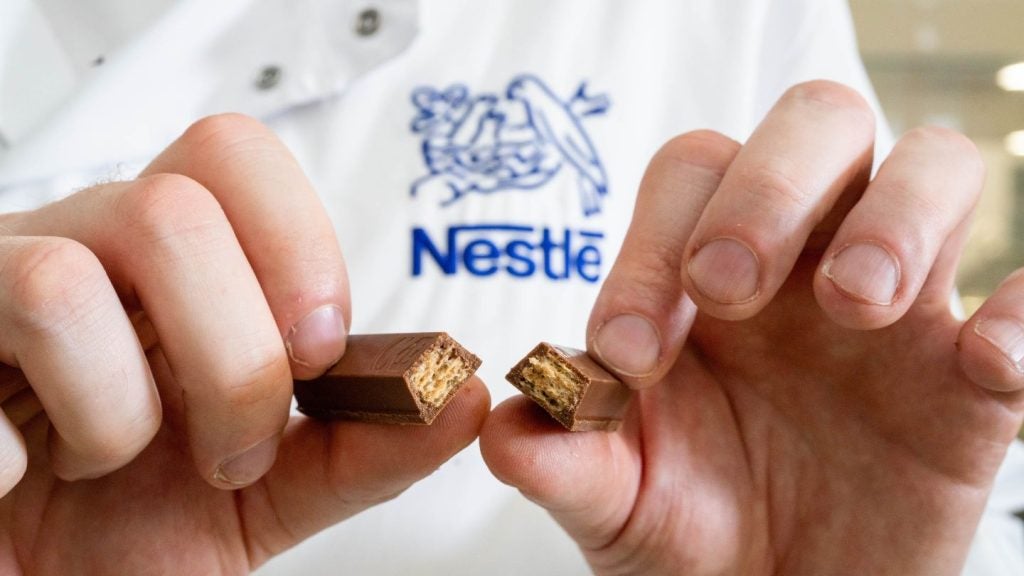
Nestlé has teamed up with Wildfarmed to use the UK miller's "regeneratively farmed" wheat in KitKat bars.
After trials last year at Nestlé's plant in York in northern England, the Swiss food and beverage giant is now including the wheat in production at the factory.
In a statement to Just Food, Nestlé said the new bars are due to land on retail shelves within the next four weeks. The packaging of the product will remain the same.
Nestlé said 51% of the wheat used in each bar is from Wildfarmed, with the rest sourced from the confectioner’s existing suppliers.
“Moving to regenerative farming at scale takes time, our ambition is to increase the proportion over time. Using 51% allows us to help support the transition, guarantee supply, quality and quantity, and test, learn and scale responsibly,” Nestlé said.
Wildfarmed, set up in 2018, supplies its ingredients to food manufacturers, retailers and foodservice operators. According to the UK firm, its practices can support its customers' efforts to increase biodiversity, improve soil health and reduce carbon.
The company also markets its own range of bakery products, which are sold in UK retailers including Tesco and Waitrose.
"Partnering with Nestlé to use regenerative British wheat is a big step forward in our mission to make regenerative farming the default, not the exception, and prove that nature restoration can sit at the heart of iconic brands,” Wildfarmed CEO and co-founder Edd Lees said.
As a group, Nestlé has a goal to source 50% of its "key ingredients" from farmers using regenerative agriculture by 2030.
There is no recognised and approved definition for regenerative agriculture. However, Nestlé said the concept brings together approaches including conservation agriculture, agroecology and low input farming.
"The absence of a formal definition of regenerative agriculture allows for pragmatism – adapting practices to local environmental conditions and the fostering of innovation. Transitioning to regenerative farming is a knowledge-intensive journey, requiring collaboration with farmers and further research," the company states in its Nestlé Agriculture Framework report.