

Global food commodity prices rose in September to an almost four-year high, according to a benchmark UN index, led by sugar and wheat, amid weather and shipping-related constraints.
The FAO Food Price Index averaged 136.0 points in September, according to the monthly report of the United Nations’ Food and Agriculture Organization (FAO) tracking five key commodities.
The figure represents a 1.5% month-on-month growth and its highest level since November 2022.
It was 5.8% higher than last year, though it was 15.1% below the peak recorded in March 2022.
Increases across sugar, cereals, and vegetable oils drove the headline number upward, offset by dips in dairy and meat.
Sugar reported the steepest surge, climbing 6.1% from August to 114 points, its highest level since April last year.
The rally was driven by forecasts of “tighter” international availability for the 2026/27 cycle, Thailand's output curbs, India's “below-normal” rainfall, heavy downpours in Brazil, and smaller EU sugar beet plantings, outlined the agency.
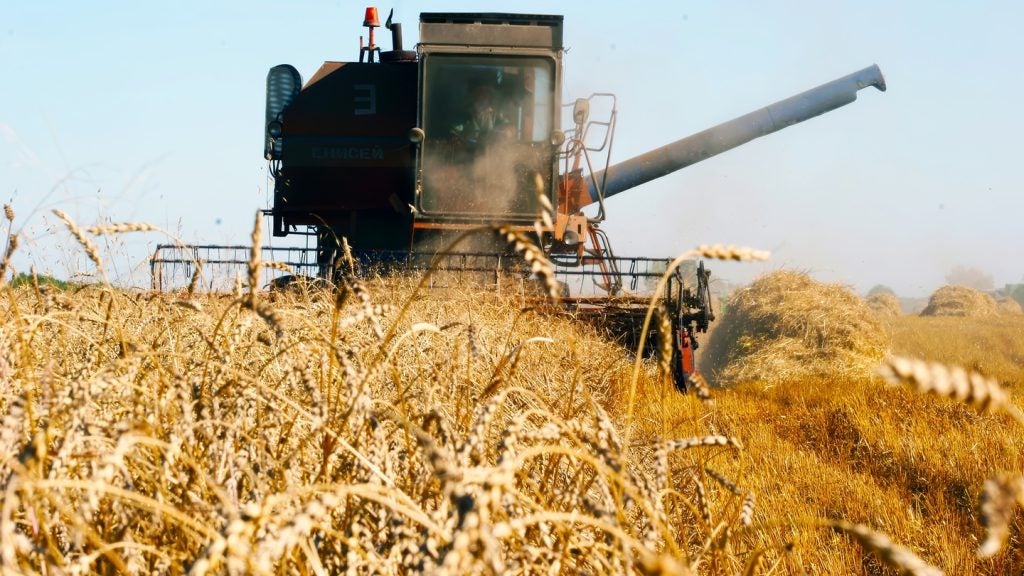
The constituent cereal price index rose 5.1% from August to 122.8 points, reflecting a 17.2% annual climb.
World wheat prices jumped 6.3% from the previous month to its highest mark since August 2023, pressured by dry North American soils and transport bottlenecks in the Black Sea.
Meanwhile, US yield concerns, lower Brazilian exports, Black Sea disruptions and the disruption to shipping in the Strait of Hormuz resulted in a 5.6% rise in maize prices.
The rice price index grew 1.4% as Indica rates increased under weather stress and “tighter” seasonal supply.
“If sustained, these pressures will soon pass through to consumer food prices, especially in food and energy import dependent countries,” said Maximo Torero, the chief economist of FAO.
The vegetable index settled at 198.6 points, up 0.9% from August and 18.3% year-on-year. Higher palm oil values drove the increase, prompted by “strong" import appetite and dry weather in Southeast Asia.
Conversely, the index for meat retreated 1.1% to 127.9 points as abundant export supplies lowered pig and poultry prices.
Ovine prices remained “largely stable”, though Brazil’s bovine quotes rose from “stronger” US demand, as per findings.
For dairy, the index slipped 0.1% month-over-month to 119.1 points.
According to the agency, decline in cheese “slightly’ offset higher milk powder quotations, while butter “changed little”.
Separately, the FAO maintained its global 2026 cereal production forecast at 2.98 billion tonnes. While 2.1% below last year, it would still be the second-largest harvest on record.