

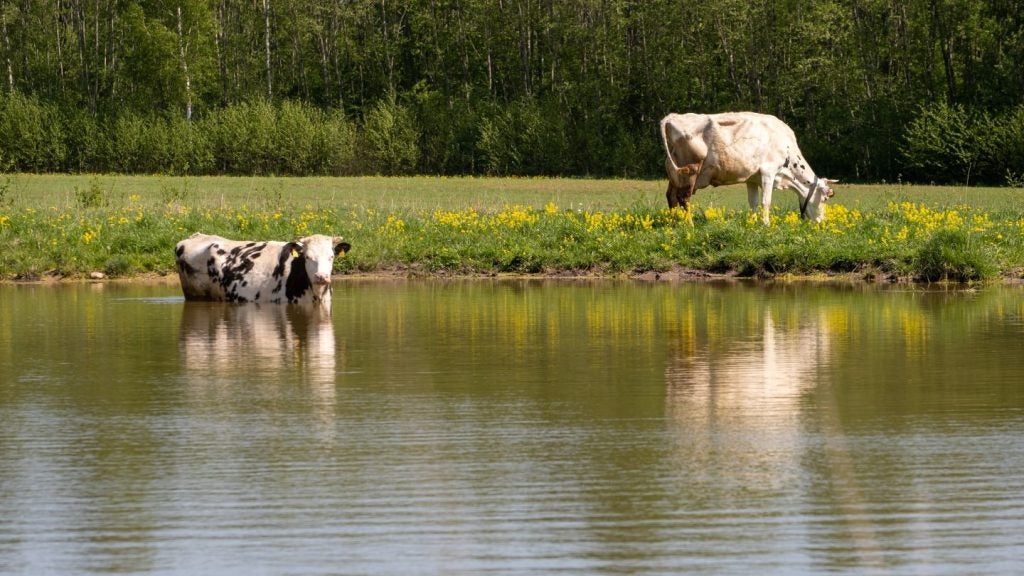
The UK dairy industry has seen 18.5 million litres wiped off milk yields amid the series of heatwaves that has hit the country in recent weeks.
Milk production fell by about 5.8 million litres during the first heatwave, which peaked at 35.1°C in late May, the Agriculture and Horticulture Development Board (AHDB) said.
Before that spell of hot weather, output had been running between 1.6% and 2% above the five-year average.
During the heatwave, that margin slipped to only 0.4% above the same benchmark.
Milk volumes did not return fully to previous levels until mid-June.
A second heatwave struck at the end of June as temperatures climbed to 37.7°C.
By early July, the seven-day rolling average production had fallen to 2.9% below the five-year average, leading to an estimated additional loss of 12.7 million litres, the AHDB said.
The squeeze on supply has already fed through to dairy markets.
Spot milk prices rebounded by about 10 pence per litre, reaching between 38ppl and 48ppl.
Bulk cream prices also moved higher, climbing to around £1.60 ex-works, up from the £1.37 ($1.83) AHDB recorded at the end of June.
“Climate change means that severe heat events are likely to become a more common feature of British summers and will become an increasingly important dynamic facing the industry,” AHDB lead dairy analyst Susie Stannard said.
Against that backdrop, Stannard called on the sector to begin considering heat-resistance as a “genetic goal” over the longer term.
"Hotter temperatures as well mean more pressure on grazing so pasture management will require extra thought," she said. "Processors may need to consider supply disruptions as a more regular feature of summer."
At the same time, Stannard said the current market reaction is “likely a temporary response, as market fundamentals remain unchanged”.
She pointed to expanding milk production in the US and New Zealand, a 4.9% fall in the Global Dairy Trade (GDT) index at the latest auction and elevated butter stocks.
Meanwhile, some cheese manufacturers have been selling milk into the spot market instead of using it for cheese production, a move that may “tighten” cheese markets, she added.