

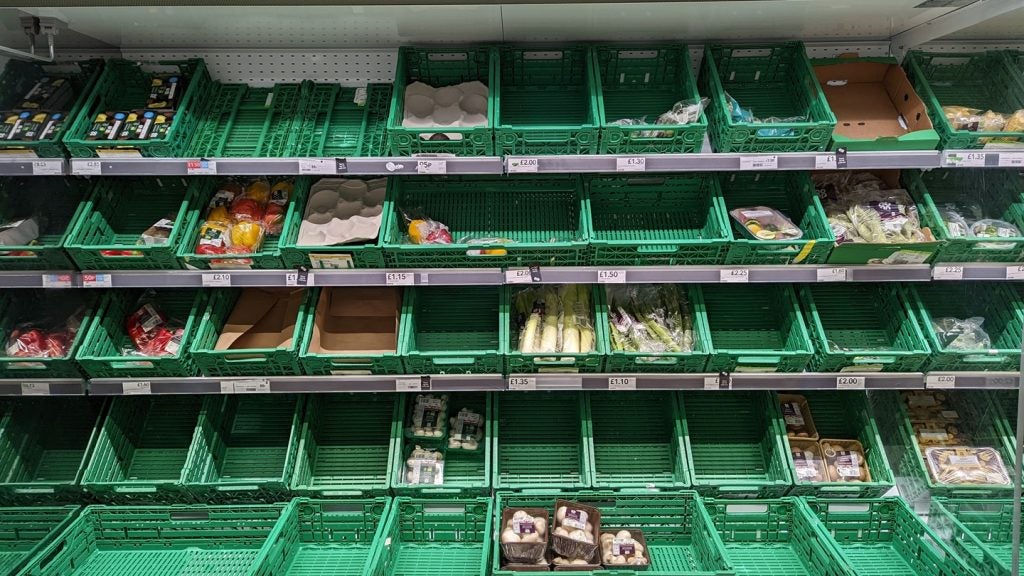
The UK needs to “learn” from other countries to protect its food supply chain against disruptions, a new report says.
According to an assessment by the country's National Audit Office (NAO) Defra should work more closely with the industry, households and communities so that the food supply chain can weather “increasingly likely and severe" hazards like extreme weather and cyber-attacks.
These escalating dangers are intensifying pressure on food, which the Government classifies as one of the country's 13 Critical National Infrastructure sectors.
In a statement, Gareth Davies, the head of the NAO, said: “Defra should learn from approaches taken in other countries, and strengthen preparedness for emergencies by testing plans with local government and industry.”
The spending watchdog acknowledged that Defra has initiated key measures, such as boosting the size of its Food Supply Chain Resilience team and prioritising strategy creation for major supply emergencies.
However, its findings showed the Department for Environment, Food & Rural Affairs (Defra) has “done too little in recent years” to prompt businesses, citizens, and local neighbourhoods to brace for potential deficit situations.
Government research indicates that UK households lag behind compared to several other countries regarding how prepared they are for emergencies, the NAO said.
While the private sector managed the flow of goods through crises like the COVID-19 pandemic and the war in Ukraine without heavy state funding, conditions are shifting.
Rising environmental volatility leaves Defra “less confident” that private enterprises can withstand future shocks independently.
Furthermore, industry leaders told the NAO that communication with Defra has dwindled since the pandemic. They also reported “limited” involvement in drafting the government’s emergency response playbook, threatening its real-world viability, the NAO said.
National emergency simulations have also "largely excluded food supply chain businesses".
In order to bolster the UK's food supply chain resilience, the NAO urged Defra to "refresh" how it engages with food supply chain companies as well as review "the potential costs and benefits of approaches used to build resilience in other sectors or countries" and if those "are wholly or partly applicable to the UK's food supply chain".
It also called for a review of its legal powers, and for it to work with the Cabinet Office to improve food preparedness among households and communities.