

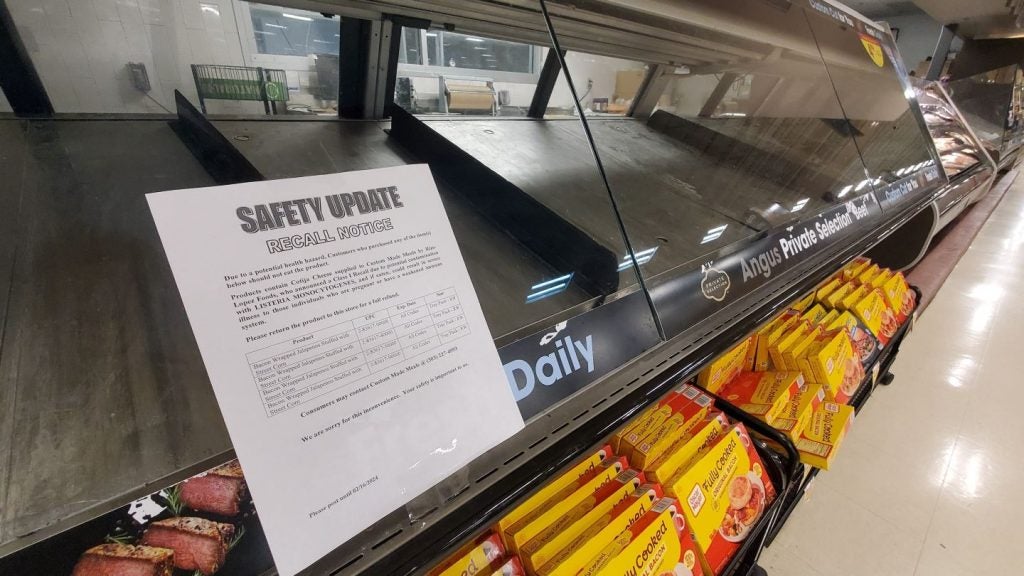
Food and drink recalls in the US increased in 2025 to reach a nine-year high, according to new research.
The US Food and Drug Administration (FDA) recorded 571 recalls last year, a 15.4% rise compared to 2024, a report from claims firm Sedgwick said
The recalls involved 138.5 million units, a 209% increase in volumes year-on-year, the data showed.
FDA-regulated food recalls in the fourth quarter increased 7.6% from the prior three months to 156.
In 2025, bacterial contamination drove 96.4m recalled units, compared to foreign materials (19.7m) and undeclared allergens (16m).
Top allergens by units were: colourings (4.71m), milk (3.8m) and crustaceans (2.6m).
Prepared foods led recall events (158 or up 27.7%) but supplements led in terms of units (67.2m).
Sedgwick also reported US Department of Agriculture (USDA) recalls.
For the full year, USDA recall volumes reached 67.6 million pounds, the highest in 13 years.
Foreign material was linked to 97.3% of pounds recalled, with one 58-million-pound corn dog recall identified as the main driver due to the presence of wood.
In the fourth quarter, USDA recall events doubled to 12, while pounds recalled dropped to 76m from 58.5m in Q3.
In the USDA's 2025 recalls, foreign materials led events (13) and pounds (65.8m or up 97.3%).
Misbranding/undeclared allergens had nine events (675,150 pounds); no inspections had eight.
By category, pork and poultry led events (15 and 13 respectively); pork led pounds (61.05m), followed by poultry (5.06m).
Infant formula was highlighted as a continuing pressure point.
Sedgwick reported a botulism outbreak prompted the FDA to emphasise recall preparedness.
As of 17 December 2025, one recalled brand had been linked to 51 infant illnesses and hospitalisations, the report noted.
The FDA also issued warnings to retailers after recalled products were found to still be available for sale weeks after being flagged.
The report pointed to a more active regulatory approach to claims and ingredients.
In January 2025, the FDA updated its definition of “healthy” for the first time in more than a decade, setting new requirements products must meet to use the claim.
Also in January, the agency issued two new guidelines on allergens, intended to clarify labelling expectations and explain how the FDA assesses the public health significance of allergens, according to the report.
Ingredient oversight also moved up the agenda.
The FDA advanced a proposal aimed at closing the “GRAS loophole", shifting from voluntary to mandatory submissions before use.
In parallel, senators introduced the Better Food Disclosure Act, which would expand post-market petitions to review ingredients.
Ultra-processed foods were cited as an emerging area of activity at state and local level.
California enacted what it described as the first US legal definition tied to the FDA’s Substances Added to Food database and nutrient thresholds.
Separately, San Francisco filed a suit against ten major ultra-processed food manufacturers.
In Texas, lawmakers passed a warning label requirement for products containing any of 44 additives, though the measure is facing an industry challenge based on federal pre-emption and constitutional arguments