

The US is the largest market for Groupe Bel, accounting for a third of the French dairy giant’s sales.
The maker of Babybel and The Laughing Cow cheese also expects the US to deliver more than half of the group’s growth over the next five years, underlining the importance of the market to the privately owned business.
Go deeper with GlobalData


Discover B2B Marketing That Performs
Combine business intelligence and editorial excellence to reach engaged professionals across 36 leading media platforms.
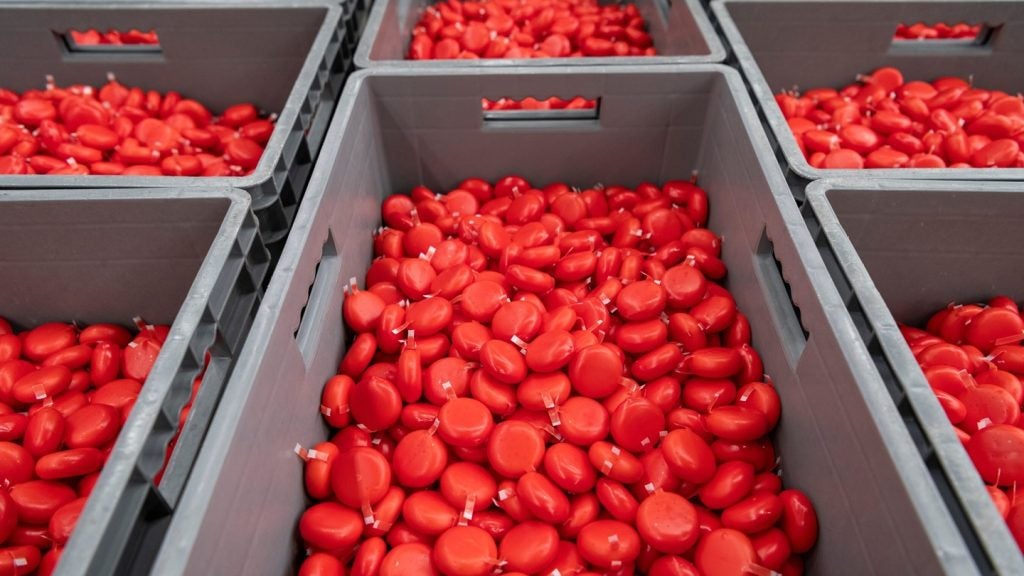
In March, eyeing demand for “portion-sized dairy snacks” and for protein more broadly, Bel announced plans to invest $200m to double the production of Babybel at its plant in South Dakota, one of two cheese manufacturing facilities the company has in the US.
Just Food sat down with Negar Sedghi, the general manager of Bel’s cheese business in the US, to discuss the company’s expansion plans Stateside, the impact of GLP-1 drugs and evolving dietary guidelines on consumer behaviour and how the company is reacting to the emerging use of AI by shoppers – a topic she plans to explore at the Dairy Innovation Strategies USA 2026 conference in Chicago later this month.
Dean Best (DB): I believe the US is Bel’s biggest market by sales?
Negar Sedghi (NS): Absolutely. The US is our biggest retail cheese market and it’s expected to deliver over 50% of the group’s growth in the next five years. The US is a very important market for Groupe Bel and it’s a market where we’re developing quite rapidly. I think we’re on the right trend here. The food industry in this market is evolving rapidly and, at Bel, for 150 years we’ve been bringing healthier and responsible food for all.

In the US, snacking is one of the main forms of food intake, so our portfolio and our brands are a perfect fit for demand. We have two cheese manufacturing plants, one in Brookings, South Dakota, and one in Wisconsin. We also use co‑manufacturers here in the US and, to respond to demand, we do some importation as well.
However, we’re making significant investments in the market to be able to respond to the ever‑increasing demand, so we are doubling our capacity for the production of Babybel.
Our cheese sales are growing quite rapidly and strongly. From a volume perspective, over the past three years we’ve been growing at a rate of 6–8% on an annual basis. Our net sales are growing faster.
We’re offering what consumers in this market are looking for: healthier options. We’re uniquely positioned to respond to consumers’ needs for healthier snacks.
We’re the only snacking company here in the US with a portfolio positioned as healthier around dairy, fruit and vegetables and that is driving demand and growth for us.
DB: Is your growth rate ahead of the parts of the cheese category you’re in?
NS: It is. On snacking cheese we’re growing faster than the category for sure and on the overall cheese category we’re growing faster as well.
DB: What is driving that?
NS: We are investing in marketing but a big driver is the composition of our portfolio. We have a portfolio of very unique brands. Babybel is all about this lovely snack that is not only healthy and nutrient‑dense but also tasty. Then you have the playfulness around it: the bags, the opening, the reveal.
I’d say our portfolio, our innovation and the way we communicate are driving our growth. We’re also expanding our route to market into channels where we are under‑represented, which offers big growth levers. Out‑of‑home consumption is big in the US. There’s also the development of e‑commerce and AI‑driven e‑commerce, which is another lever of growth for us.
DB: What percentage of your cheese sales in the US is out‑of‑home? I’m assuming retail is the big part?
NS: Yes, retail is the big part. In out‑of‑home, we have what we call ‘on‑the‑go’ and we have ‘on‑premise’.
Right now, we’re roughly around 3–5% of our sales in the out‑of‑home channel – and 50% of consumption in the US happens out of home, so you can see the road we have to develop this channel. It’s a big opportunity and we are aiming to more than double our presence in this channel in the years to come.
DB: Can you outline ways you’re looking to grow out‑of‑home?
NS: I can give you some examples on the on‑the‑go side of the business. It’s all about availability in convenience stores and grab‑and‑go areas and, for that, we’ve evolved our portfolio to cater to that channel.
For example, for Babybel we’ve launched a two‑count Babybel in a flow‑pack that is a perfect on‑the‑go snack. Two portions of Babybel give you between eight and ten grammes of protein, depending on the variant. It’s easy to consume and easy to put in your bag.
What’s helping us a lot is this whole healthier trend. Convenience stores, which traditionally haven’t been a destination for healthier snacks, are rethinking their portfolios. That’s a perfect match between what we offer and what retailers and shoppers are asking for.
DB: According to the International Dairy Foods Association, there’s around $13bn of capital investment going into new and increased capacity in dairy in the US. Have you got any other projects planned?
NS: We have another project which is confidential, so I won’t talk about that but, yes, we do have another project going on.
There are a lot of investments being made in the dairy industry. We’re in a very interesting moment in the US – and probably globally – in how the food industry is evolving. We have these major transformational elements that are here to stay. We’re at the crossroads of these big transformations. GLP‑1 is a big one here in the US. One out of eight – and I think even more – Americans are on GLP‑1.
Then, specific to the US, you have the new dietary guidelines. They call for the consumption of real, nutrient‑dense food, more vegetables and more dairy. In the new dietary guidelines, dairy is specifically mentioned, and especially full‑fat dairy is called out as a group of nutrients to be consumed more. Around 80% of Americans are not eating enough dairy, fruit and vegetables, so there is a nutritional gap to be closed.
I’ve been here for three years and I can see the shift that has happened over that time. The US market is extremely fast – maybe a little bit more like Asia. Things happen really fast and social media has a humungous influence.
Because of GLP‑1, one of the very interesting side effects is there is much more awareness about healthier eating. You have many influencers talking about better ways of eating – not just for GLP‑1 users but for the general population. These forces are really shaping the food industry in the US and dairy is definitely benefiting.
DB: On GLP‑1, what changes are you seeing in the purchasing and consumption habits in the category segments you’re in?
NS: GLP‑1 reduces your appetite, so when they do have appetite, it becomes extremely important that what they eat is nutrient‑dense, so they don’t lose nutrients and, as a result, don’t lose muscle. That’s where the ‘hype’ behind protein comes from – and it’s not a hype anymore, it’s a trend here to stay.
We see a reduction in portion sizes and that’s where our portfolio fits the best because our products are perfectly portioned, Babybel, The Laughing Cow.
GLP-1 changes the behaviour of the person using it and changes the behaviour of the family
We also see an increase in protein consumption because you need that protein intake to protect your muscles. You need fibre intake to support gut health, because GLP‑1s can lead to constipation and with that we see – and hope for – more consumption of vegetables. We accompany that as well. For example, with a portion of The Laughing Cow you make a salad more tasty, so it encourages you to eat some greens. You might not be a fan of greens – I’m not one – but I do eat them with Boursin.
Something interesting with GLP‑1 is it changes the behaviour of the person using it and changes the behaviour of the family. The whole household is impacted because what sits in your fridge changes completely. I think it’s a great thing for the next generations. Adults on GLP‑1 change consumption behaviour at home and kids are exposed to different food items. Hopefully, in the future they won’t need GLP‑1s and will naturally learn how to eat better. We see changes in the consumption of individuals and also families.
Like anything else, it creates marketing hype as well. Now you see protein on everything – sometimes it’s mind‑blowing. You have cookies that are high in protein etc. In the future we’ll see that correct itself, because awareness will grow that you cannot have protein on empty calories.
The use of GLP‑1 in the US will expand rapidly, even more rapidly than today. As pills become more available and use becomes more convenient, GLP‑1 will definitely shape the future of food here.
DB: When you present at the Dairy Innovation Strategies USA 2026 conference in Chicago this month, you plan to talk about how “AI is changing the cart” and shoppers’ increasing use of, for example, AI-generated shopping lists.
NS: I’m fascinated by this transformational element that’s coming and I strongly believe that, over the next months and years – and actually already – it will totally change how shoppers shop. It’s a whole different mindset.
I keep telling our teams that today and tomorrow it’s all about marketing to algorithms now – marketing to humans but marketing to algorithms as well.
You’ll ask your AI agent – I’m a Claude user – to make a shopping list for you by describing what you need. You might say: ‘I have a birthday party for my son who’s four years old. I have ten kids coming and two of them are allergic to this and that. Make a list for me.’ The challenge for brands will be: how do you make sure you show up on that list?
Search words won’t work in the same way anymore because even in my prompt I might not mention ‘cheese’. How do you make sure snacking cheese is part of a birthday party for kids of a certain age?
Findability and getting into the consideration set are going to change significantly. You won’t be searching by category anymore; you won’t go to a ‘cheese’ category – you’ll go to a need state and that’s where you’ll get recommendations.
Another interesting element is you might go to one environment to build your list and then go to another retail environment to do the shopping. The connection between those – and making sure that when you arrive in the retailer environment you show up as a preferred brand – is critical.
There’s a lot to be done in understanding how these AI agents behave. Where do they go to look for information? How is that information used?
Today and tomorrow it’s all about marketing to algorithms as well as marketing to humans
It’s going to be great for shoppers because all these calculations I need to do – ‘Do I get enough protein for the calories I’m using?’ and so on – can be done very quickly by the AI agent. Shoppers can make more informed decisions.
But ‘garbage in, garbage out’, so you need to make sure you have the right information about your brands out there in the world and that people talking about you are saying the right things. The agents don’t crawl only your webpages or blogs. We discovered a few months ago that Reddit is one of the biggest sources. Comments and reviews – that’s where the agents go.
Marketing of the future is going to be much more about data management – or at least a big part of it – versus the emotional management that traditional marketing sometimes focuses on. Beautiful pictures will not work as well as they worked before.
DB: Are brands approaching Google and Microsoft to strike deals so their brands appear in agents’ results – like a marketing agreement?
NS: From my understanding – we’re all discovering this – agents, you cannot necessarily control how they behave, where they go and how they search. It’s not a controlled way, so you cannot just strike a deal and say: ‘Only go and search these areas for my brands.’ You need to make sure there is generally good words [messages] about you.
DB: I was wondering if Bel could say to a Microsoft or Google: ‘Can you teach your agents that, when they mention cheese, the results emphasise our brands?’ But that doesn’t sound possible.
NS: Not that I know of, no. And that’s what makes it very interesting. You have these AI agents but then big retailers are developing their own AI capabilities. Walmart, for example, is very advanced – it’s impressive what they’re doing. They’ve developed their own AI agent internally and there’s more and more usage of it on their site.
You will have to navigate different environments. Sometimes your shopper goes to a Copilot‑type agent that makes a list and then sends it to a retailer. Or you go directly to the retailer and they have their own AI agent – like Walmart’s Sparky.
DB: Does that make it easier to have that kind of conversation we theoretically outlined with Microsoft or Google but instead perhaps strike a deal with Walmart on Sparky?
NS: It’s all about the information you provide on your products. It becomes the art of developing the PDP [product detail page], so what information do you provide to Walmart’s database so that [its agent] makes the right choices. It’s all about knowing what kind of information about your brand is out there and making sure the right information is being analysed by the agents.
DB: How much of your marketing spend are you diverting to this area?
NS: We consider this part of our e‑commerce strategy. E‑commerce is another big channel of growth for us. We’re making more and more investment. I don’t have the percentage off the top of my head, but, as part of our e‑com strategy, we’re focusing on making sure we’re ready for [AI]. I wouldn’t say we have all the answers – we’re all in discovery, test‑and‑learn mode, because it’s unknown territory. But we’re moving full‑steam on these tests and learns and discovering how to deal with the agents.
DB: Obviously other dairy companies are trying to ride the GLP‑1 wave and other food companies are looking at AI-enabled shopping. Where do you feel Bel is? Are you playing catch‑up?
NS: I believe we are at the forefront. AI has been an area where Groupe Bel has strong partnerships with external partners. We work on making our organisation AI‑enabled, inside out.
DB: And in the context of GLP‑1?
NS: I think we were there before GLP‑1 was a trend. Everyone wants to talk about GLP‑1 but, if you look at the big snacking companies here, no-one can claim they have a portfolio that is 100% nutrient‑dense and healthier. We don’t have sodas in our portfolio. We don’t have potato chips in our portfolio. That gives us a real edge as we go to market with a portfolio of healthier snacks based on dairy, fruit and vegetables.
DB: Are you seeing that snacking overall is going down?
NS: Absolutely, as a result of GLP‑1 and the dietary guidelines and greater awareness, we see an impact on salty snacks, sweet snacks and so on. They are huge categories, so they won’t disappear but you do see pressure.
You also see it in the M&A activity in the market – everyone is rushing either to renovate or to change their portfolio through acquisitions and mergers. This is happening and it’s happening fast. We consider ourselves fortunate to have been on this trend for 100 years.
—
We’re delighted to invite you to Dairy Innovation Strategies USA, a two-day event in Chicago this September 15-16 exploring the business issues shaping the US dairy sector.
Across the two days, you’ll hear presentations and insights from leading brands and organisations including Groupe Bel, Sargento Foods, DMI, Organic Valley and many more.
Alongside the conference programme, there will be exhibition stands showcasing the latest products, services and innovation, as well as multiple networking opportunities throughout the event – giving you plenty of chances to meet industry peers, exchange ideas and make new connections.
Whether you’re looking to stay up-to-date with the latest developments in the industry, discover new opportunities or connect with key players across the sector, we’d love to welcome you to Chicago.
Find out more on the website or register now to secure your place.


