
EU lawmakers have agreed to update rules around the production, labelling, certification, and trade of organic products.
On Tuesday (20 October), the European Parliament and EU Council said they entered a provisional deal which looks "to support the competitiveness of the EU’s organic sector while maintaining high standards and consumer trust".
The changes specifically aim to make current regulations "clearer and easier to apply" and lower administrative hurdles, especially for smaller producers.
They are also intended to “support the competitiveness” of the EU’s organic sector and deliver “greater legal certainty” for organic imports, a statement from the Council said.
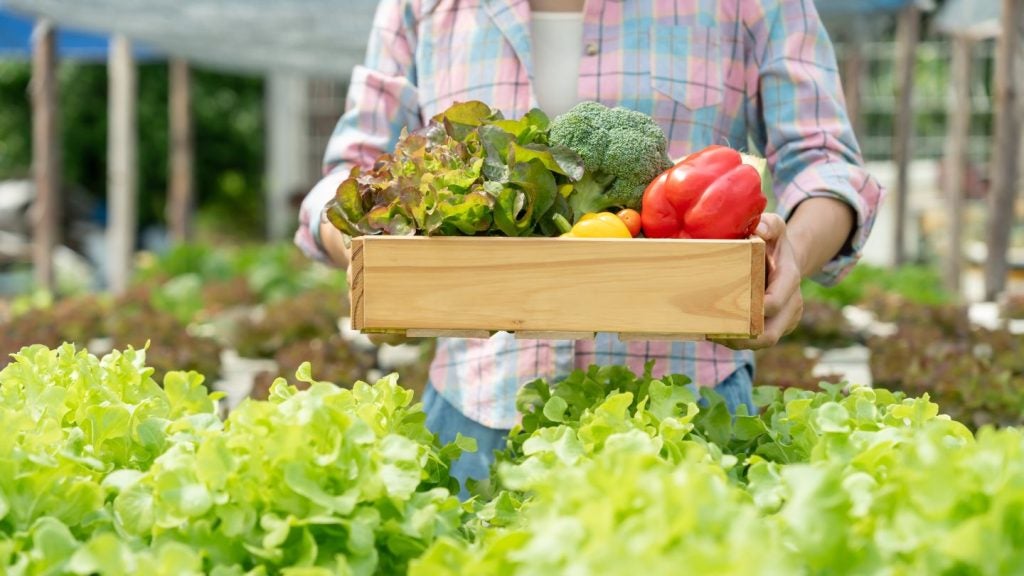
Small businesses that sell unpackaged organic goods directly to consumers, including loose fruit and vegetables, are currently exempt from certification requirements.
The revised framework raises the exemption’s turnover limit from €20,000 ($22,411.73) to €40,000 annually, based on the average turnover of the preceding five years.
It also doubles the annual sales-volume ceiling from 5,000kg to 10,000kg.
Subject to certain conditions, the exemption will also cover small online retailers selling pre-packed organic products.
The agreement also makes clear that imports from non-EU countries with organic standards are recognised as equivalent to those in the EU to continue using descriptions including 'organic'.
Such products may display the organic logo of their country of origin.
They may only use the EU organic logo if they meet "additional production and monitoring requirements beyond those covered by equivalence, for instance relating to living soil, animal welfare and processing methods," the Council outlined in its statement.
Additionally, the Council and Parliament extended organic standard recognition for 11 non-EU nations, including the US, Canada, Argentina, and New Zealand, by 10 years, shifting the expiration date to 31 December 2036.
Lawmakers also dropped a Commission proposal that would have permitted use of the EU organic label on products containing under 5% of ingredients sourced from non-EU countries that do not satisfy additional criteria.
To prevent market disruption, products labelled under existing rules can remain on sale until stocks are depleted.
Transitional measures will also support continuity and legal certainty for imported organic goods and international trade as the revised framework enters force.
The provisional agreement now requires endorsement by the Council and Parliament, followed by legal-linguistic revision and formal adoption.
The institutions aim to conclude the process before the end of this year.