
Nestlé is facing “legal action” from India’s food-safety regulator over accusations of “non-compliance” in the Swiss giant’s infant formulas.
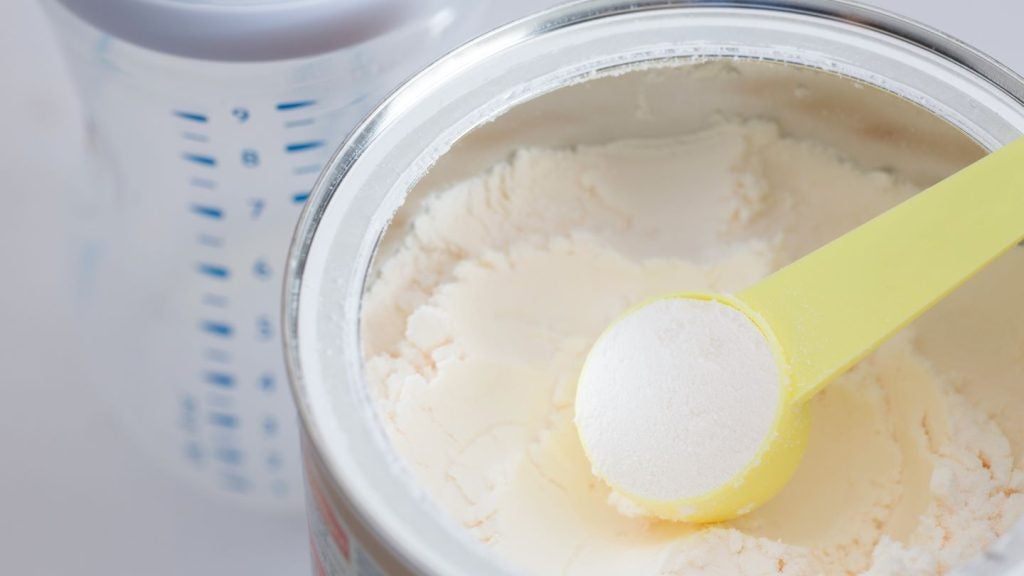
Three “adjudication cases” have been lodged by the Food Safety and Standards Authority of India (FSSAI) pertaining to Nestlé’s NAN Excella Pro Stage 1 and Lactogen Pro 1 infant powders, along with an alleged shortcoming over biotin.
The FSSAI claims the world’s largest food manufacturer is in violation of the FSS Act regarding “several non-compliances”.
Nestlé’s business unit in India insists it is in “adherence” with all FSSAI regulations as the safety body said it had an issue with “promotional material available on e-commerce platforms” relating to the formulas concerned.
“In NAN Excella Pro Stage 1, claims relating to ‘5 HMOs’ and ‘Whey Protein’ were observed, while in Lactogen Pro 1, a claim relating to ‘Whey Protein’ being easy to digest was observed,” the FSSAI said in a social media post.
“Accordingly, clarifications were sought from M/s Nestlé India Limited regarding the above claims.”
The regulator did not fully explain what the non-compliance contraventions were, nor did it outline the nature of the five human milk oligosaccharides (HMOs) at issue.
However, it added: “Both products were found to be in contravention of Regulation 4(2) of the FSS (Foods for Infant Nutrition) Regulations 2020, which restricts promotional claims/material intended to increase the saleability of infant foods, and section 3 of the IMS Act 1992, which prohibits their advertisement and promotion.”
In its defence, a spokesperson for Nestlé in India said in a statement provided to Just Food: “We confirm to adherence of all regulations including all norms and label declarations as per applicable laws. We will continue to work closely and support FSSAI in its efforts towards consumer awareness.”
The spokesperson explained: “Our products are fully compliant with all the applicable regulations.
“The said products (NAN Excella Pro and Lactogen Pro) and their labels were approved by the expert committee of FSSAI. In response to the notice, we have again submitted our detailed response to the authorities regarding statements appearing on the label, which are factual in nature, and supported by scientific literature.”
Meanwhile, India’s food-safety regulator said its laboratory analysis revealed a sample of “follow-up formula manufactured by M/s Nestlé India Limited was found sub-standard with respect to biotin”.
Biotin is a soluble B vitamin also known as vitamin B7, which helps with the formation of fatty acids and glucose.
“The sample was subsequently referred for re-analysis, and the referral laboratory also found the sample non-conforming with respect to the prescribed biotin requirement under the Food Safety and Standards (Foods for Infant Nutrition) Regulations 2020,” the FSSAI said.
Just Food understands the issues around the two named formulas revolve around FSSAI concerns that marketing of HMOs and whey proteins in baby food powders might encourage consumption away from breast milk.
Meanwhile, there is a dispute between Nestlé and the regulator over the permissible levels of biotin.
The actions against Nestlé follow a number of recent orders from the regulator.
In August, it ordered the local company Dabur India to stop selling a range of food products carrying what the FSSAI said were “misleading” claims pertaining to labels on organic products.
Later that month, Dabur India secured a freeze order from the Delhi High Court.
India’s drinks sector also faced the FSSAI’s wrath in July when Associated Alcohols and Breweries was accused of braking the Food Safety and Standards Act over “artificial flavour” declarations on its labels.
Like Dabur India, the beverages business then won a stay order in August from a high court in Madhya Pradesh.
Meanwhile, Diageo-controlled United Spirits said last month it would launch legal action against the FSSAI over a directive banning the sale of one of its spirits products in India.
Tests by the regulator allegedly found artificial or “nature-identical flavours” had been added to some rum and whisky products.
Other companies facing the same accusations included Mohan Rocky Springwater and Inbrew Beverages.
Energy drinks manufacturers also came under FSSAI scrutiny in July due to “misbranding and misleading claims”.
They included Red Bull, PepsiCo, Reliance Consumer Products and Coca-Cola.