

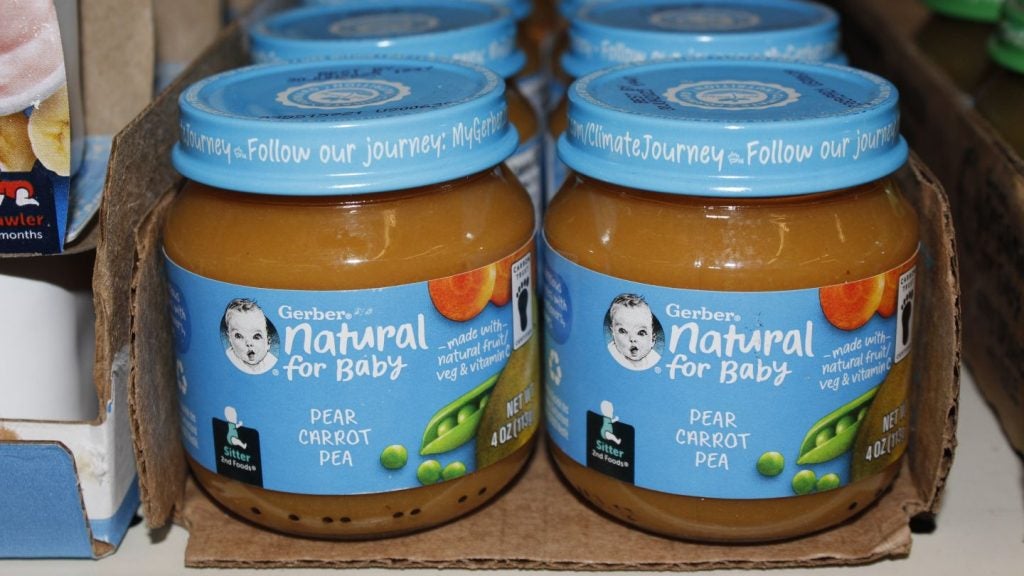
Texas Attorney General Ken Paxton is suing Nestlé and its US subsidiary Gerber for selling baby food containing heavy metals while "falsely" marketing them as safe.
In a statement issued yesterday (14 October), Paxton’s office accused Gerber of “deceiving” consumers by promoting its products as “safe, rigorously tested, and recommended by paediatricians” despite internal tests revealing “dangerous levels” of arsenic and lead.
Responding to inquiries from Just Food, a Nestlé spokesperson said the “allegations are without merit”.
Under final FDA guidance released in 2025, action levels for lead stand at 10 parts per billion (ppb) across fruits, yogurts, puddings, single-ingredient meats, and most produce. The threshold increases to 20 ppb for dry infant cereals and single-ingredient root vegetables. The agency capped inorganic arsenic across all infant rice cereals at 100 ppb.
Texas claims that, between 2017 and 2019, Gerber allegedly processed 67 rice flour lots containing more than nine times the arsenic permitted by federal rules for bottled water.
The AG's office also said tests also revealed carrot batches with cadmium concentrations up to 17 times the baseline, while sweet potatoes exceeded the bottled-water lead threshold nearly tenfold.
The Nestlé spokesperson said: “Heavy metals are commonly found in the environment and can be absorbed by certain fruits, vegetables and grains in trace amounts as they grow. While heavy metals cannot be completely eliminated from the food supply, Gerber has long been committed to reducing their presence through careful ingredient sourcing, supplier requirements, testing and quality controls.”
According to the Nestlé spokesperson, the company’s products face screening across more than 500 toxins and contaminants and safety normsthat meet or “often exceed” US benchmarks.
In August last year, state officials launched a probe into Gerber and Plum Organics over presence of heavy metals in baby food.
Plum Organics settled the matter in September after pledging to “strengthen” testing standards and improve consumer “transparency”.